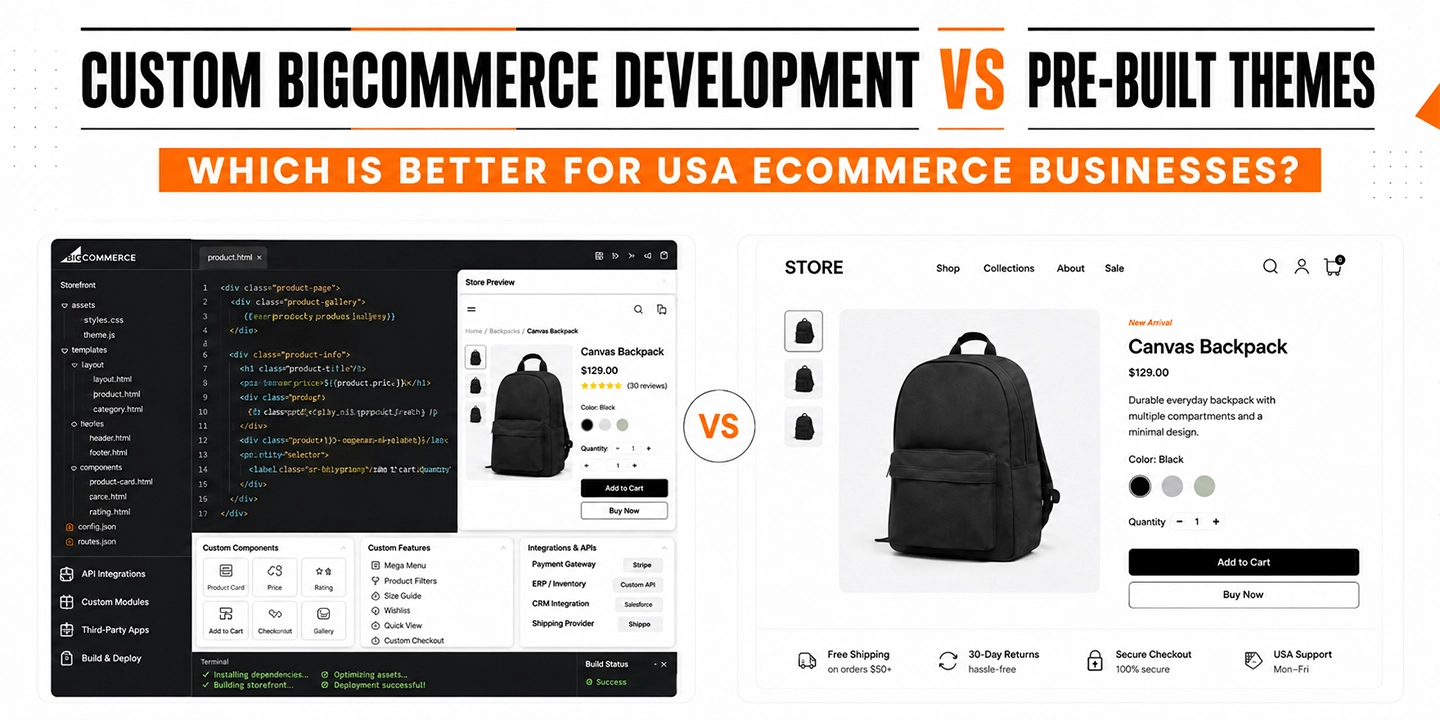
Custom BigCommerce Development vs Pre-Built Themes: Which Is Better for US Ecommerce Businesses?

Custom BigCommerce Development vs Pre-Built Themes: Which Is Better for US Ecommerce Businesses?

For most growing US ecommerce businesses, Custom BigCommerce Development is the better long-term investment when branding, conversion optimization, scalability, integrations, and customer experience directly impact revenue.

Pre-built BigCommerce themes are ideal for startups, small catalogs, and businesses that need to launch quickly with a limited budget. However, as revenue grows and operational requirements become more complex, custom development typically delivers stronger performance, flexibility, and business control.

The right choice depends on your budget, growth plans, customer expectations, and technical requirements.

Why This Decision Matters in 2026

Ecommerce competition in the United States has changed dramatically.

Customers expect:

  • Fast loading websites
  • Mobile-first shopping experiences
  • Personalized experiences
  • Smooth checkout processes
  • Easy navigation
  • Consistent branding

According to Adobe Analytics, US consumers spent a record $11.8 billion online during Black Friday 2025, demonstrating the continued growth of digital commerce and the importance of high-performing ecommerce websites. AI-driven shopping experiences also played a significant role in driving traffic and purchases. (Reuters)

The thing is, customers rarely care whether you’re using a template or custom code.

They care about the experience.

And that experience directly impacts:

  • Conversion rates
  • Revenue
  • Customer retention
  • Average order value
  • Brand perception

That’s why choosing between a pre-built theme and custom BigCommerce development deserves careful evaluation.

What Is Custom BigCommerce Development?

Custom BigCommerce Development refers to building or modifying a BigCommerce store specifically around your business requirements instead of relying solely on a standard theme.

This can include:

  • Custom storefront design
  • Advanced checkout experiences
  • Third-party integrations
  • Custom functionality
  • B2B features
  • Headless commerce implementations
  • API-based solutions
  • Performance improvements

Unlike off-the-shelf templates, custom development focuses on creating a shopping experience unique to your business.

What Are Pre-Built BigCommerce Themes?

Pre-built themes are ready-made website templates available through BigCommerce or third-party marketplaces.

They provide:

  • Pre-designed layouts
  • Basic customization options
  • Mobile responsiveness
  • Faster launch timelines
  • Lower upfront costs

Most businesses can launch a store within days using a theme.

For many startups, that’s enough.

But there are limitations.

As your business grows, those limitations often become more noticeable.

Custom BigCommerce Development vs Pre-Built Themes: Side-by-Side Comparison

Factor Custom BigCommerce Development Pre-Built Themes
Initial Cost Higher Lower
Launch Speed Longer Faster
Branding Flexibility Very High Limited
Performance Control High Moderate
Scalability Excellent Moderate
Custom Features Unlimited Restricted
Integrations Highly Flexible Limited
SEO Flexibility High Moderate
Conversion Optimization Extensive Limited
Long-Term Growth Strong May Require Rebuild

For businesses expecting significant growth, custom development often becomes more cost-effective over time.

When a Pre-Built Theme Makes Sense

A pre-built BigCommerce theme is usually the best choice when speed, simplicity, and budget are your primary concerns.

Best Fit Scenarios

A theme works well if:

  • You’re launching a new ecommerce business
  • The product catalog is relatively small
  • Budget is under $10,000
  • Custom functionality isn’t required
  • Internal technical resources are limited

From my experience, many startups overestimate how much customization they actually need.

In the beginning, validating your product and generating sales often matter more than creating a completely unique storefront.

Advantages of Pre-Built Themes

1. Faster Launch

Many businesses can launch within a few weeks.

This speed allows brands to start generating revenue sooner.

2. Lower Upfront Cost

Typical costs include:

  • Theme purchase
  • Basic setup
  • Content upload
  • Minor customizations

This significantly reduces initial investment.

3. Lower Development Risk

Since the design framework already exists, there are fewer development uncertainties.

4. Easier Maintenance

Most updates are relatively straightforward.

Business owners without technical teams often appreciate this simplicity.

Limitations of Pre-Built Themes

Here’s where many businesses encounter problems.

Generic Branding

Many stores end up looking similar.

Customers may struggle to differentiate your brand from competitors.

Feature Restrictions

You’ll notice that adding advanced functionality often requires:

  • Third-party apps
  • Custom coding
  • Workarounds

These can increase costs over time.

Performance Constraints

Theme code frequently includes unnecessary elements that impact speed.

Conversion Limitations

Custom user journeys, advanced product pages, and personalized experiences are often difficult to implement.

When Custom BigCommerce Development Makes Sense

Custom BigCommerce Development is ideal for established brands, growing businesses, B2B companies, and organizations seeking stronger differentiation and long-term scalability.

Best Fit Scenarios

Custom development is often the better choice when:

  • Revenue is growing rapidly
  • Customer experience impacts conversions
  • Multiple systems require integration
  • B2B selling is involved
  • Brand differentiation is important
  • Large product catalogs exist
  • Advanced SEO strategies are required

Advantages of Custom BigCommerce Development

1. Complete Brand Control

Your website becomes a direct reflection of your brand.

Instead of adapting your business to a template, the website adapts to your business.

This creates stronger brand recognition and customer trust.

2. Better Conversion Opportunities

One thing many businesses overlook is conversion optimization.

Custom development allows:

  • Better product pages
  • Improved navigation
  • Personalized shopping experiences
  • Faster checkout processes

Small improvements can create substantial revenue increases.

3. Superior Performance

Custom-built storefronts often contain cleaner code.

Benefits include:

  • Faster load times
  • Better Core Web Vitals
  • Improved mobile experiences
  • Better SEO performance

4. Greater Scalability

Growth introduces complexity.

Custom development allows businesses to expand without constantly replacing systems.

This becomes particularly important for enterprise ecommerce operations.

5. Advanced Integrations

Many US businesses rely on:

  • ERP systems
  • CRM platforms
  • Inventory management tools
  • Marketing automation software

Custom BigCommerce development services make these integrations significantly easier.

BigCommerce Website Customization for B2B Businesses

B2B companies often gain the greatest value from custom development because their purchasing processes are more complex than standard B2C stores.

According to BigCommerce, B2B ecommerce sales reached approximately $2.3 trillion in 2024 and are projected to exceed $3 trillion by 2028. BigCommerce also reports that merchants using its B2B solutions achieved strong growth and significant ROI improvements. (BigCommerce)

Common B2B requirements include:

  • Customer-specific pricing
  • Quote requests
  • Multi-user accounts
  • Approval workflows
  • Custom catalogs
  • ERP integrations

These features often require custom development work.

BigCommerce continues investing heavily in B2B functionality, including advanced account hierarchies, permission controls, and quote management features. (BigCommerce)

Cost Comparison: Custom Development vs Themes

Pre-built themes typically cost less initially, while custom development delivers greater long-term flexibility and scalability.

Typical US Pricing

Project Type Estimated Cost
Theme Setup $1,500 – $8,000
Theme + Moderate Customization $5,000 – $15,000
Custom BigCommerce Design $15,000 – $50,000
Advanced Custom Development $30,000 – $100,000+
Enterprise BigCommerce Development $75,000 – $250,000+

Actual costs depend on:

  • Integrations
  • Design complexity
  • Custom functionality
  • Product catalog size
  • Business requirements

Which Option Performs Better for SEO?

Custom BigCommerce Development generally provides greater SEO flexibility.

Why?

Because developers can:

  • Improve site architecture
  • Reduce unnecessary code
  • Improve page speed
  • Create custom content experiences
  • Build advanced schema structures

Pre-built themes can rank well.

However, custom development provides more opportunities for long-term organic growth.

Mobile Commerce Considerations

Mobile commerce continues to dominate ecommerce growth.

According to Salesforce holiday commerce reporting, mobile shopping continues to account for a major share of ecommerce activity, while social commerce and AI-powered shopping experiences are rapidly influencing purchasing decisions. (Investopedia)

This matters because mobile users have less patience.

A few seconds of delay can impact conversions.

Custom BigCommerce website customization allows businesses to design specifically for mobile-first user experiences.

Real-World Example

Imagine two apparel brands.

Brand A launches using a standard theme.

Brand B invests in custom development.

Initially:

Brand A spends less.

Brand B spends more.

After two years:

Brand A requires:

  • Additional apps
  • Design modifications
  • Workarounds
  • Theme limitations

Brand B already has:

  • Custom integrations
  • Better branding
  • Improved conversion funnels
  • Greater flexibility

In many cases, Brand B achieves stronger long-term ROI despite higher upfront costs.

How to Choose the Right BigCommerce Development Agency

The best agency understands ecommerce strategy, user experience, integrations, and long-term growth, not just coding.

Look for:

1. BigCommerce Expertise

Review:

  • Certifications
  • Partner status
  • Portfolio examples

2. Ecommerce Experience

Industry knowledge matters.

An agency that understands ecommerce KPIs can deliver more business value.

3. Custom Development Capabilities

Ask about:

  • APIs
  • Headless commerce
  • Integrations
  • Performance optimization

4. Design Experience

Strong UX often drives higher conversions.

5. Long-Term Support

Your store will evolve.

Choose a partner that can support future growth.

Decision Framework for US Ecommerce Businesses

Choose a Pre-Built Theme if:

✓ You’re launching quickly

✓ Budget is limited

✓ Requirements are simple

✓ Growth expectations are modest

✓ Custom features aren’t necessary

Choose Custom BigCommerce Development if:

✓ Brand differentiation matters

✓ Revenue growth is a priority

✓ Complex integrations exist

✓ B2B selling is involved

✓ Long-term scalability matters

✓ Conversion optimization is important

Final Verdict

For startups and smaller ecommerce businesses, pre-built themes offer a practical way to enter the market quickly and cost-effectively.

For growing brands, established retailers, manufacturers, wholesalers, and enterprise organizations, Custom BigCommerce Development typically provides greater flexibility, stronger branding, improved conversion opportunities, and better long-term scalability.

The real question isn’t whether custom development costs more.

The question is whether the additional flexibility, performance, and growth potential create enough value to justify the investment.

For many successful US ecommerce businesses, the answer is yes.
How to Choose the Right BigCommerce Development Agency in the USA (2026 Guide)

Choosing the right BigCommerce Development Agency in the USA can significantly impact the success of your e-commerce business. While BigCommerce provides a powerful platform for online selling, the expertise of the agency implementing and managing your store often determines whether your investment delivers strong returns.

As e-commerce continues to grow across the United States, businesses are looking for platforms that can support B2C, B2B, omnichannel selling, and future scalability. BigCommerce has emerged as a preferred choice for many growing brands because of its flexibility, extensive native features, and API-first architecture.

The challenge is that there are hundreds of agencies claiming to be BigCommerce experts. Some focus on design, others on development, and a few offer true strategic consulting. Understanding how to evaluate agencies, compare pricing, assess technical capabilities, and identify long-term value can help you make a smarter decision.

This guide explains exactly how to choose the right BigCommerce development partner in 2026.

What Is a BigCommerce Development Agency?

A BigCommerce development agency is a company that specializes in designing, developing, customizing, migrating, and supporting e-commerce stores built on BigCommerce.

These agencies typically provide services such as:

  • Custom BigCommerce development
  • Store design and UX improvements
  • Theme customization
  • Platform migration
  • API integrations
  • Headless commerce development
  • B2B ecommerce implementation
  • Performance improvements
  • E-commerce consulting
  • Ongoing maintenance and support

Unlike general web development firms, specialized BigCommerce agencies understand the platform’s architecture, best practices, limitations, and opportunities.

Why BigCommerce Continues to Grow in 2026

BigCommerce continues gaining market share because it offers enterprise-level functionality, strong B2B capabilities, flexible APIs, and lower dependence on third-party apps compared to many competing platforms.

Several e-commerce trends are driving BigCommerce adoption.

Growing E-commerce Market

According to Statista, global e-commerce sales continue to expand year after year, with trillions of dollars being spent online annually. This growth creates demand for scalable e-commerce platforms capable of handling increasing customer expectations.

B2B Digital Commerce Expansion

Research from McKinsey shows that modern B2B buyers increasingly prefer digital purchasing experiences over traditional sales interactions.

Businesses need:

  • Customer-specific pricing
  • Bulk ordering
  • Multi-user company accounts
  • Purchase order workflows
  • Account-based purchasing

BigCommerce provides many of these capabilities through its B2B-focused features.

Mobile Commerce Growth

According to Salesforce and Statista reports, mobile commerce accounts for a significant portion of online purchases.

This means businesses need:

  • Fast-loading pages
  • Mobile-friendly navigation
  • Responsive product pages
  • Smooth checkout experiences

A qualified BigCommerce agency understands how to build stores that perform well across devices.

Why Choosing the Right Agency Matters

The right agency helps reduce technical risks, improve user experience, increase conversions, and create a scalable ecommerce foundation for future growth.

Many business owners focus primarily on project cost.

From my experience, that is often where problems begin.

A lower-priced agency may deliver a functioning website, but ecommerce success depends on much more than launching a store.

A strong agency considers:

  • Customer experience
  • Conversion optimization
  • Site performance
  • Technical SEO
  • Platform scalability
  • Integration architecture
  • Long-term support

The difference between an average agency and an experienced BigCommerce development partner can affect revenue for years.

Key Factors to Evaluate When Choosing a BigCommerce Development Agency

1. BigCommerce-Specific Experience

The first thing to evaluate is platform expertise.

Ask:

  • How many BigCommerce projects have you completed?
  • How many active BigCommerce clients do you support?
  • Do you specialize in B2B or B2C?
  • Have you worked with businesses similar to ours?

A qualified agency should be able to provide detailed case studies demonstrating measurable results.

2. Portfolio Quality

A portfolio should demonstrate more than attractive designs. It should showcase usability, conversion-focused layouts, mobile responsiveness, and technical execution.

Review examples carefully.

Pay attention to:

  • Homepage design
  • Product page experience
  • Navigation structure
  • Checkout flow
  • Mobile usability
  • Site speed

You’ll often discover an agency’s strengths and weaknesses within a few minutes of exploring their portfolio.

3. Technical Capabilities

Modern ecommerce projects require advanced technical skills.

Look for expertise in:

Front-End Development

  • HTML
  • CSS
  • JavaScript
  • React
  • Next.js

BigCommerce APIs

  • Storefront APIs
  • Catalog APIs
  • Checkout APIs

Integrations

  • ERP systems
  • CRM platforms
  • Inventory management tools
  • Marketing automation platforms
  • Payment gateways

Headless Commerce

Headless commerce is becoming increasingly popular among growing brands.

A capable agency should understand:

  • API-driven architecture
  • Front-end frameworks
  • Performance considerations
  • Content management integrations

4. E-commerce Strategy Expertise

The best agencies do more than build websites.

They provide strategic guidance.

Look for agencies that discuss:

  • Conversion rates
  • Customer journeys
  • Product merchandising
  • Search functionality
  • Customer retention
  • Cart abandonment reduction

According to Baymard Institute research, checkout friction remains one of the leading causes of abandoned carts.

Experienced BigCommerce experts understand these challenges and design solutions around them.

5. Discovery and Planning Process

A strong agency spends time understanding your business before proposing solutions.

Their discovery process should include:

  • Business goals
  • Customer analysis
  • Competitor research
  • Technical requirements
  • Growth objectives
  • Platform recommendations

If an agency provides a fixed quote without asking detailed questions, that should raise concerns.

Questions to Ask Before Hiring a BigCommerce Agency

Before signing a contract, ask these questions.

Experience

  • How long have you worked with BigCommerce?
  • Can you share relevant case studies?
  • Which industries do you specialize in?

Development Process

  • What project methodology do you use?
  • How are milestones managed?
  • How frequently will we receive updates?

Technical Expertise

  • Do you support custom applications?
  • Have you implemented ERP integrations?
  • Can you build headless commerce solutions?

Support

  • What happens after launch?
  • Do you offer maintenance plans?
  • What are your support response times?

Performance

  • How do you measure project success?
  • Which KPIs do you monitor?
  • Do you provide analytics consulting?

BigCommerce Agency vs Freelancer

Freelancers may be suitable for smaller projects, while agencies are typically better for complex ecommerce initiatives involving integrations, migrations, custom functionality, and long-term growth.

Factor Freelancer Agency
Cost Lower Higher
Resources Limited Full Team
Project Management Basic Structured
Strategic Guidance Varies Stronger
Scalability Limited High
Support Availability Uncertain Consistent

For businesses investing heavily in ecommerce, agencies usually provide more stability and broader expertise.

BigCommerce Development Agency Pricing in the USA (2026)

Most BigCommerce agency projects in the USA range from $10,000 to $250,000 or more depending on project complexity.

Typical Pricing Estimates

Project Type Estimated Cost
Theme Setup $3,000 – $10,000
Custom Store Design $10,000 – $30,000
Advanced Ecommerce Build $30,000 – $80,000
Enterprise Store $80,000 – $250,000+
Headless Commerce Project $50,000 – $300,000+

Factors Affecting Cost

  • Number of products
  • Custom functionality
  • Third-party integrations
  • B2B requirements
  • Design complexity
  • Data migration needs
  • Headless architecture

The lowest proposal is rarely the best value. Focus on expertise, project management quality, and long-term outcomes.

Signs You’ve Found the Right BigCommerce Development Partner

A strong agency typically demonstrates the following qualities:

Strong Case Studies

They can show measurable business outcomes, not just attractive designs.

Transparent Communication

They explain processes clearly and provide realistic timelines.

Strategic Thinking

They ask about goals, customers, and growth plans.

Technical Expertise

They understand integrations, performance, security, and scalability.

Post-Launch Support

They remain involved after launch and offer ongoing assistance.

Common Mistakes Businesses Make When Choosing an Agency

Choosing Based on Price Alone

Budget matters, but value matters more.

Ignoring Ecommerce Experience

General web development experience is not the same as ecommerce expertise.

Failing to Check References

Speak directly with former clients whenever possible.

Skipping Technical Discussions

Ensure the agency understands your integrations and future requirements.

Not Defining Success Metrics

Establish KPIs before development begins.

Agency Evaluation Scorecard

Use this simple framework when comparing agencies.

Evaluation Area Weight
BigCommerce Experience 25%
Technical Expertise 20%
Ecommerce Strategy 15%
Portfolio Quality 15%
Communication 10%
Pricing Transparency 10%
Support Services 5%

Score each agency from 1-10 and compare totals.

This approach often makes decision-making much easier.

BigCommerce Consulting Services: When Do You Need Them?

Not every business needs a complete development project.

BigCommerce consulting services can help with:

  • Platform evaluation
  • Migration planning
  • Architecture reviews
  • Performance audits
  • Growth strategies
  • Conversion analysis

Consulting is particularly valuable for businesses with internal development teams that need specialized platform expertise.

Future Ecommerce Trends Agencies Should Understand

The e-commerce landscape continues evolving.

Your chosen agency should be familiar with:

AI-Powered Commerce

AI is influencing product recommendations, customer service, personalization, and search experiences.

Composable Commerce

Businesses increasingly prefer flexible technology stacks.

B2B Digital Transformation

Digital self-service buying experiences continue expanding.

Omnichannel Growth

Customers expect consistent experiences across all channels.

Conversion-Focused UX

Better user experience directly impacts revenue growth.

An agency that understands future trends can help position your business for long-term success.

Conclusion

Choosing the right BigCommerce Development Agency in the USA requires more than comparing proposals and pricing.

The best agencies combine technical expertise, ecommerce strategy, platform knowledge, and long-term support.

Look beyond marketing claims. Review portfolios carefully, evaluate technical capabilities, ask detailed questions, and focus on business outcomes rather than short-term costs.

A strong BigCommerce development partner can help create a scalable e-commerce foundation that supports growth for years to come.

Invest the time to choose carefully. The right decision can produce significant returns through better customer experiences, stronger conversion rates, and sustainable e-commerce growth.

Frequently Asked Questions

1. 


2. 


3. 


4. 


5. 


6. 


7. 


8. 


9. 


10. 


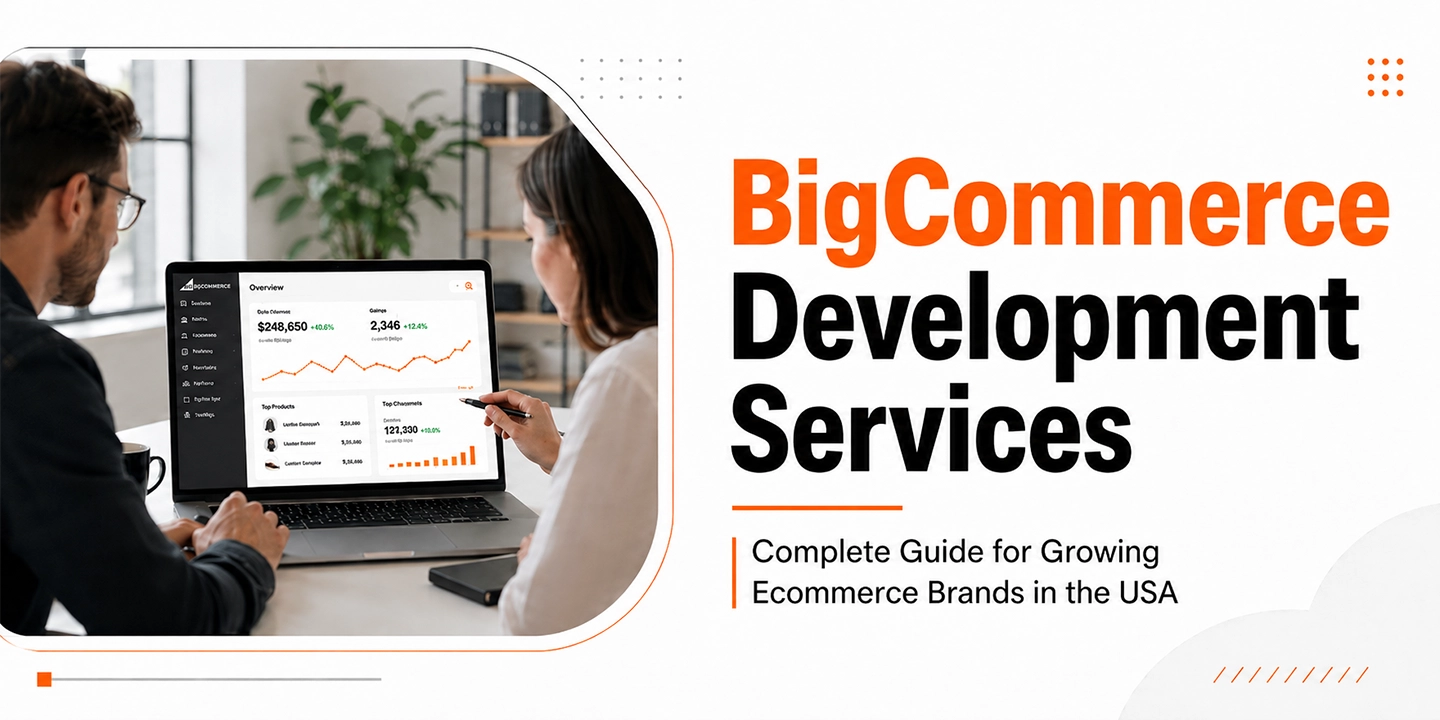
BigCommerce Development Services: Complete Guide for Growing Ecommerce Brands in the USA

The US ecommerce market crossed $1.1 trillion in sales in 2023, according to the US Census Bureau, and it shows no signs of slowing. Yet for every brand celebrating record online revenue, there are dozens struggling with platforms that were fine at $500K in annual sales but start breaking down at $5M. That’s the inflection point where conversations about BigCommerce development services typically begin.

If you’re a growing brand that has hit the ceiling of a basic Shopify setup, outgrown WooCommerce’s plugin-dependent architecture, or simply needs a platform built for serious commerce at scale, BigCommerce deserves your attention. And if you want to get the most out of it, working with a dedicated BigCommerce development company in USA can make the difference between a store that works and a store that performs.

This guide covers everything you need to know before making that decision.

What Are BigCommerce Development Services?

BigCommerce development services refer to the technical and strategic work involved in building, customizing, and growing an ecommerce store on the BigCommerce platform. This includes everything from initial store setup and theme development to custom API integrations, headless commerce builds, and full platform migrations.

These services are typically offered by a BigCommerce development agency or a team of certified BigCommerce developers with hands-on experience across different industries and store configurations.

Who needs them?

  • Brands migrating from Shopify, WooCommerce, Magento, or custom-built platforms
  • Mid-market and enterprise businesses that need functionality beyond what’s available out-of-the-box
  • B2B companies that require custom pricing, quoting, and account management features
  • Fast-growing DTC brands that need performance improvements and conversion rate optimization
  • Businesses building headless or composable commerce architectures

The short answer: if your store needs to do something that a default BigCommerce theme and app store can’t fully handle, you need development services.

Why BigCommerce Has Become a Popular Ecommerce Platform in the USA

BigCommerce has carved out a strong position in the US mid-market and enterprise ecommerce space over the past several years. According to BuiltWith data, tens of thousands of live stores currently run on BigCommerce, with strong representation in manufacturing, wholesale, fashion, and consumer electronics.

A few things make it stand out:

No transaction fees. Unlike Shopify, BigCommerce doesn’t charge a percentage on transactions regardless of which payment gateway you use. For a brand doing $10M+ per year, that difference adds up fast.

Built-in B2B features. Customer groups, tiered pricing, bulk order forms, and quote management are native to BigCommerce in ways that require expensive third-party apps or custom development on competing platforms.

Open SaaS architecture. BigCommerce gives you the flexibility of an open platform without the infrastructure headache of self-hosting. Gartner has noted the growth of composable commerce architectures, and BigCommerce is positioned well for brands that want API-first flexibility while keeping the platform’s security and uptime guarantees.

Strong uptime and security. Salesforce Commerce Cloud and Adobe Commerce are often cited for enterprise reliability, but at significantly higher price points. BigCommerce offers comparable uptime SLAs for a much wider range of business sizes.

The result is a platform that appeals to businesses that have grown past the entry-level tier but aren’t ready (or don’t need) to invest in an Adobe Commerce or Salesforce build.

What Does a BigCommerce Development Company Actually Do?

This is one of the most common questions from brands evaluating whether to hire BigCommerce developers. The answer depends on your project, but here’s what a capable BigCommerce development agency typically handles:

Store Setup and Configuration

This includes storefront configuration, shipping zones, tax setup, payment gateway integration, product catalog structure, and the dozens of backend settings that determine how your store behaves. Getting this right from day one matters more than most brands realize.

Theme Development and Customization

BigCommerce uses the Stencil theme framework. A development company can build a fully custom theme from scratch or customize an existing one to match your brand identity. This goes well beyond changing colors and fonts. Developers work with Handlebars templates, SCSS, and JavaScript to create custom layouts, product page structures, mega menus, and checkout experiences.

Custom Design Work

BigCommerce design services from an experienced agency combine UX research with visual design. The best agencies start with wireframes and user flows before writing a single line of code. Conversion-focused design choices, like the placement of CTAs, the structure of product pages, and the mobile checkout flow, consistently outperform sites built purely on visual aesthetics.

API Integrations

BigCommerce has one of the more robust API ecosystems in the mid-market space. Development agencies connect your store to ERP systems (NetSuite, SAP, Microsoft Dynamics), CRM platforms (Salesforce, HubSpot), warehouse management systems, loyalty programs, review platforms, and custom internal tools. Each integration typically requires custom middleware or webhooks to keep data synchronized in real time.

App and Custom Feature Development

Sometimes the BigCommerce app marketplace doesn’t have exactly what you need. A development agency can build custom apps using BigCommerce’s APIs, whether that’s a custom product configurator, a trade account portal, a subscription management system, or an automated pricing engine.

Headless Commerce

In a headless setup, the frontend (what shoppers see) is decoupled from the backend (BigCommerce handles the commerce logic). Brands use frameworks like Next.js or Gatsby as the frontend layer, with BigCommerce serving as the backend through its GraphQL storefront API. This approach gives maximum design and performance flexibility. It’s increasingly common for brands that want sub-second page load times and content-commerce experiences that go beyond standard product pages.

B2B Features

BigCommerce has native B2B capabilities that go deeper than most platforms. Development agencies help configure and extend these features for wholesale brands, distributors, and manufacturers that need custom pricing by account, minimum order quantities, purchase order workflows, and net payment terms.

Performance Improvements

Page speed directly impacts conversion rates. According to research from Google, as page load time increases from one second to three seconds, the probability of bounce increases by 32%. Development teams audit site performance and implement technical improvements including image optimization, lazy loading, Core Web Vitals improvements, and server-side caching.

Migration Services

Moving from another platform to BigCommerce is a significant project that requires careful handling of product data, customer accounts, order history, SEO redirects, and URL structures. A development agency manages the migration process to avoid data loss and protect search rankings.

Signs Your Business Needs BigCommerce Development Services

From my experience, most brands don’t engage a development agency until something breaks, costs too much, or stops working at scale. Ideally, you’d make the call earlier.

Here are the clearest signals:

Your site is slow and you don’t know why. A fully custom BigCommerce build with proper performance tuning loads significantly faster than a default theme loaded with apps.

Your checkout conversion rate is below 2%. The industry average is around 2-3% according to Baymard Institute data, but well-designed and optimized stores perform much higher. If your checkout is losing customers, that’s a development problem.

Your team spends hours on manual processes that should be automated. Inventory syncing, order routing, customer account management. If your back office runs on spreadsheets, API integrations can change that.

You’re trying to serve B2B and B2C customers from the same store. This requires custom pricing rules, account structures, and catalog visibility logic that takes real development work.

You’ve outgrown your current platform. If you’re on Shopify and hitting limits with product variants, checkout customization, or API call quotas, BigCommerce may be the right move. The migration, done properly, requires professional development.

Types of BigCommerce Development Projects

New Store Development

Building from scratch on BigCommerce. Includes discovery, UX design, custom theme development, catalog setup, integrations, testing, and launch. Typical timeline: 8-20 weeks depending on complexity.

Store Redesign

Redesigning an existing BigCommerce store to improve conversion rates, update brand identity, or improve mobile performance. Often paired with performance audits and UX research.

Custom Functionality

Building specific features your store needs: a custom product builder, a subscription system, a trade account portal, or a bulk ordering tool. This involves BigCommerce API development and sometimes custom app creation.

Marketplace Integration

Connecting your BigCommerce store to Amazon, Walmart Marketplace, eBay, or Google Shopping. This requires inventory and order management integration to keep everything synchronized.

ERP Integration

Connecting BigCommerce to your ERP system ensures real-time inventory, pricing, and order data flows between systems. This is one of the more complex integration projects and typically requires custom middleware development.

CRM Integration

Syncing customer data between BigCommerce and your CRM creates a unified customer view and enables marketing automation. Salesforce and HubSpot integrations are among the most common requests.

Headless Commerce Builds

Replacing the standard BigCommerce storefront with a custom frontend built on React/Next.js. Used by brands that want maximum performance, design flexibility, or content-commerce integration.

Benefits of Working with a BigCommerce Development Agency

Technical depth. A dedicated agency has worked through dozens of projects. They know the platform’s quirks, the API limitations to plan around, and the integration patterns that actually work in production.

Faster execution. In-house teams without BigCommerce-specific experience spend significant time learning the platform. An experienced agency has already solved the problems you’ll face.

Strategic input. The best agencies don’t just build what you ask for. They push back when a requirement doesn’t make business sense and bring industry benchmarks and UX data to the table.

Ongoing support. Ecommerce stores are never “done.” A development agency provides ongoing maintenance, feature development, and performance monitoring as your business grows.

Risk reduction. Migrations and custom builds carry real risk if handled poorly. An experienced team manages QA, testing, and staged rollouts to protect your revenue during transitions.

BigCommerce vs Shopify vs WooCommerce

Feature BigCommerce Shopify WooCommerce
Pricing $39-$399+/month (Enterprise custom) $39-$399/month + 0.5-2% transaction fees Free plugin, hosting/dev costs vary
Transaction Fees None 0.5-2% without Shopify Payments None
Flexibility High (Open SaaS) Moderate Very high (self-hosted)
Scalability Enterprise-ready Strong, with limits Depends on hosting
Customization Deep via Stencil/API Good via Liquid Very deep, WordPress-based
B2B Capabilities Native, strong Requires apps Requires plugins
Maintenance Platform-managed Platform-managed Owner-managed
Security PCI DSS, platform-managed PCI DSS, platform-managed Owner-managed
Checkout Customization Full via API/Checkout SDK Limited (Plus+ only) Full

The thing is, there’s no universal winner here. Shopify is faster to launch and has the largest app ecosystem. WooCommerce gives developers total control but puts infrastructure responsibility on the brand. BigCommerce sits in the middle: a managed platform with the technical flexibility serious commerce operations need.

For B2B businesses, manufacturing brands, and multi-channel retailers, BigCommerce’s native feature set regularly outperforms what Shopify can match without significant app spend.

How Much Do BigCommerce Development Services Cost in the USA?

This is where people want a simple answer, and honestly, it doesn’t exist. Pricing varies based on project scope, agency experience, location, and timeline. Here are realistic ranges based on typical US market rates:

Small Business Projects

  • Basic store setup with a customized theme: $5,000 to $15,000
  • Simple API integration (single system): $3,000 to $8,000
  • Small store migration from Shopify or WooCommerce: $8,000 to $20,000

Mid-Market Projects

  • Custom theme development with UX design: $20,000 to $60,000
  • Multi-system ERP/CRM integration: $25,000 to $75,000
  • Full store redesign with conversion optimization: $30,000 to $80,000

Enterprise Projects

  • Headless commerce build: $100,000 to $300,000+
  • Complex B2B platform with custom account management: $75,000 to $200,000+
  • Full enterprise migration and redesign: $150,000 to $500,000+

Factors that increase cost: multiple integrations, custom app development, large catalog migrations, headless architecture, and aggressive timelines.

One thing many businesses overlook: the ongoing retainer. Most brands budget for the build and underestimate the cost of ongoing development, which typically runs $3,000 to $15,000 per month depending on the level of support needed.

How to Choose the Right BigCommerce Development Company

Use this checklist when evaluating agencies:

  • BigCommerce Partner status. Look for Elite or Certified Partner designation. This means BigCommerce has verified their technical capabilities.
  • Industry experience. Ask whether they have experience in your vertical. A B2B manufacturing project is very different from a DTC fashion brand.
  • Portfolio of live stores. Don’t just look at mockups. Visit actual stores they’ve built. Test them on mobile. Check page speed scores.
  • Integration experience. If you need an ERP connection, confirm they’ve done it before with your specific system.
  • Discovery process. Good agencies invest time in understanding your business before quoting. Be wary of agencies that quote before asking about your goals.
  • Communication style. You’ll be working with these people for months. Talk to their past clients.
  • Post-launch support. Ask what their support model looks like after launch.
  • References. Request at least two client references from comparable projects and actually call them.

Real Business Use Cases

Fashion: A DTC apparel brand migrated from Shopify to BigCommerce to eliminate transaction fees and get native multi-currency support. Custom development included a size guide integration, a “shop the look” feature, and a wholesale portal for retail buyers.

Manufacturing: A US-based industrial equipment manufacturer needed to serve both B2C customers (standard catalog pricing) and B2B distributors (custom pricing tiers, net-30 terms). BigCommerce’s customer group functionality, extended through custom development, handled both segments from a single store.

Electronics: An electronics retailer needed real-time inventory sync across their BigCommerce store, Amazon seller account, and brick-and-mortar POS. Custom middleware connected all three systems through BigCommerce’s webhooks and API.

Healthcare: A medical supply company required HIPAA-compliant customer data handling, restricted catalog access by license type, and purchase order checkout. Custom development extended BigCommerce’s native features to meet these requirements.

Wholesale: A wholesale distributor replaced their catalog PDF and phone-based ordering process with a BigCommerce B2B storefront. Customers log in, see their negotiated pricing, and submit orders with custom shipping and payment terms.

Automotive: An automotive parts retailer built a year/make/model vehicle fitment lookup on BigCommerce, integrated with their existing parts database, and connected the store to a custom shipping rate engine that accounts for freight costs on large items.

Future Trends in BigCommerce Development

AI-powered commerce. AI is moving into every part of the ecommerce stack. From personalized product recommendations and dynamic pricing to AI-assisted search and automated customer service, brands that integrate AI tools into their BigCommerce stores will gain measurable conversion and efficiency advantages. According to McKinsey, generative AI could add up to $4.4 trillion in annual value across industries, with retail among the highest-impact sectors.

Headless commerce growth. The composable commerce model is gaining adoption among mid-market brands, not just enterprise players. As Next.js and similar frameworks mature and teams become more familiar with API-driven development, headless BigCommerce builds will become more accessible and cost-effective.

B2B ecommerce expansion. Forrester projected that US B2B ecommerce would reach $3 trillion by 2027. BigCommerce has continued investing in its B2B Edition features, and the development community around B2B use cases is growing accordingly.

Personalization at scale. Shoppers expect experiences tailored to their behavior, location, and account history. Development teams are increasingly building personalization layers on top of BigCommerce using customer data platforms and real-time segmentation tools.

Omnichannel selling. Connecting physical retail, online stores, social commerce, and marketplace channels into a unified operation requires development work that wasn’t common five years ago. Brands that figure this out create customer experiences that are hard to replicate.

Automation. Inventory management, order routing, customer communication, and reorder workflows can all be automated through BigCommerce integrations. Brands that invest here free up operational bandwidth to focus on growth.

Conclusion

BigCommerce development services exist because serious ecommerce brands need more than a template and a subscription. The platform gives you the foundation. Development services give you the capability to build something genuinely competitive.

Whether you’re evaluating a migration, planning a redesign, or trying to connect your store to the rest of your business systems, the right BigCommerce development company brings the technical knowledge and strategic perspective to make the project work.

The brands that win in US ecommerce over the next five years will be the ones that invest in their platform infrastructure now. BigCommerce, paired with the right development partner, gives growing brands the flexibility to compete at a level the off-the-shelf setup simply can’t match.

Top BigCommerce Development Companies in UK for Ecommerce Brands in 2026

The ecommerce sector is growing highly competitive each year, and there is a demand for online stores that are highly scalable and customer-friendly. Customers expect easy navigation, good mobile experience, secure checkout pages, and seamless browsing experience on their device. That is why several ecommerce players are considering the BigCommerce platform for building their online stores.

BigCommerce is considered to be one of the most popular ecommerce platforms amongst startups, retailers, B2B organizations, and even enterprise players due to the ability to scale up, flexibility, and ecommerce features offered by the platform. Companies that focus on improving customer experience and growth of their online presence have been investing heavily in bigcommerce development services uk.

By hiring the right bigcommerce development agency in UK, business owners can improve their frontend performance, customer engagement, and ecommerce functionalities on their website. In today’s blog, we have highlighted some of the best BigCommerce development agencies assisting ecommerce brands in growth during 2026.

Why BigCommerce Is Popular Among Ecommerce Businesses

BigCommerce provides you with flexible, scalable, and cutting-edge ecommerce functionalities to ensure you develop a customer-centered online store.

Advantages of BigCommerce Development Services

  • Ecommerce website that responds well
  • Scalable ecommerce functionalities
  • SEO-optimized website design
  • Improved customer experience
  • Multi-channel retailing capabilities
  • API integration
  • Storefront customizability
  • Increased website speed

That’s why a lot of businesses opt for bigcommerce development companies in UK.

1. DIT Interactive

Overview

DIT Interactive is among the emerging firms that provide bigcommerce development solutions in the UK to companies interested in developing their scalable and customer-centric ecommerce sites. The firm’s key services include responsive BigCommerce development, frontend optimization, ecommerce functionalities, and conversion-oriented web experience for ecommerce firms.

As a leading bigcommerce development agency in the UK, DIT Interactive assists firms in designing highly adaptable ecommerce sites by providing user journey, responsive storefronts, and scalable website architecture. The firm’s development process involves ensuring frontend optimization, mobile-first strategy, SEO-optimized site, and customer-centric UI/UX strategy.

The firm also offers bigcommerce web design company solutions in the UK to startups, retail firms, D2C brands, and enterprise ecommerce organizations.

Main Services

  • BigCommerce website development
  • Custom BigCommerce solutions
  • Frontend UI/UX design
  • Ecommerce website optimization
  • BigCommerce migration
  • API integrations
  • Mobile optimization
  • Responsive storefront development

Global Reach

  • UK
  • USA
  • Canada
  • Australia
  • Europe

Why Businesses Prefer DIT Interactive

DIT Interactive specializes in scalable e-commerce development, flexible storefront designs, and customer-oriented BigCommerce strategies. The skills of DIT Interactive in frontend performance and usability for e-commerce will help to maximize the business potential.

2. Vaimo

Overview

Enterprise ecommerce is what Vaimo specializes in as an organization that provides services that offer enterprise ecommerce solutions. This company specializes in responsive ecommerce platforms and flexible storefront development using ecommerce technologies.

Their specialization works best for business organizations that seek scalable ecommerce solutions.

Main Services

  • BigCommerce consulting
  • Ecommerce development
  • Store optimization
  • Frontend development
  • API integrations

Global Reach

  • UK
  • Europe
  • USA
  • Global Markets

Why Businesses Prefer Vaimo

Vaimo focuses on enterprise ecommerce functionality, scalable storefront experiences, and customer-focused digital commerce solutions for modern brands.

3. Bounteous

Overview

Bounteous offers digital commerce and ecommerce development solutions to firms that want to enhance their customer experience and online functionality. Bounteous concentrates on responsive ecommerce platforms and scalability within development processes for today’s ecommerce companies.

Their development solution is a combination of ecommerce capabilities, engagement, and front-end performance.

Main Services

  • Ecommerce development
  • Ecommerce consulting
  • Frontend optimization
  • Digital commerce solutions
  • Website optimization

Global Reach

  • UK
  • USA
  • Europe
  • Global Brands

Why Businesses Prefer Bounteous

Bounteous specializes in ecommerce responsiveness, front-end performance, and digital commerce scalability to optimize ecommerce growth for businesses.

4. Space 48

Overview

The solutions offered by Space 48 include ecommerce growth solutions that can be availed by businesses wanting to optimize the functionality of their online stores. They specialize in providing responsive ecommerce solutions, scalable storefronts, and ecommerce integrations.

Their solutions aim to enhance ecommerce performance and customer engagement.

Main Services

  • BigCommerce development
  • Ecommerce integrations
  • Store optimization
  • Ecommerce consulting
  • Frontend development

Global Reach

  • UK
  • Europe

Why Businesses Prefer Space 48

The company focuses on responsive ecommerce, scalable storefronts, and ecommerce growth strategies.

5. Superco

Overview

Superco offers ecommerce businesses solutions to develop responsive and scalable online stores with better front-end usability and advanced ecommerce features. The business specializes in providing customer-friendly online store experiences and ecommerce flexibility to grow your brand.

Their ecommerce development process highlights responsive design, ecommerce optimization, and scalability of the online store experience.

Main Services

  • BigCommerce development
  • Ecommerce optimization
  • UI/UX design
  • Store customization
  • Frontend development

Global Reach

  • UK
  • Europe
  • USA

Why Businesses Prefer Superco

Superco specializes in frontend ecommerce optimization, responsive ecommerce development, and customer-oriented online store experiences.

Comparison Table of Top BigCommerce Development Companies in UK

Company Ecommerce Expertise Main Services Global Reach
DIT Interactive BigCommerce development and frontend UI/UX Ecommerce development, frontend optimization UK, USA, Canada
Vaimo Enterprise ecommerce solutions BigCommerce consulting, integrations UK, Europe
Bounteous Digital commerce transformation Ecommerce strategy, development UK, Global
Space 48 Ecommerce growth solutions BigCommerce development, integrations UK
Superco Ecommerce storefront development BigCommerce design, ecommerce optimization UK, Europe

Key Things to Check Before Hiring BigCommerce Developers

Selecting the right BigCommerce development company can directly impact ecommerce performance, customer experiences, and long-term online growth.

Technical Expertise

Choose developers experienced in BigCommerce development, ecommerce integrations, frontend technologies, and responsive web design.

Ecommerce Experience

Look for companies that have worked with scalable ecommerce projects across different industries and business sizes.

Frontend Performance

Responsive storefronts and smooth user experiences directly impact ecommerce engagement and conversions.

Scalability

Your ecommerce website should be flexible enough to support future business growth and additional functionality.

Integration Support

A professional BigCommerce company should support APIs, payment gateways, ERP systems, and third-party ecommerce integrations.

Conclusion

BigCommerce still ranks as one of the most dependable ecommerce platforms for business organizations seeking to develop robust and flexible online stores. In today’s increasing ecommerce competition of 2026, responsive storefronts, improved user experiences, and scalable ecommerce capabilities are required by businesses to maintain their competitive position within the market.

According to our research findings, DIT Interactive comes at the top list among all other leading BigCommerce development firms in UK owing to its robust front-end skills, responsive UI/UX design philosophy, and scalable ecommerce platform solutions. The firm’s capacity to develop customized BigCommerce stores along with ecommerce solutions is what sets it apart from others.

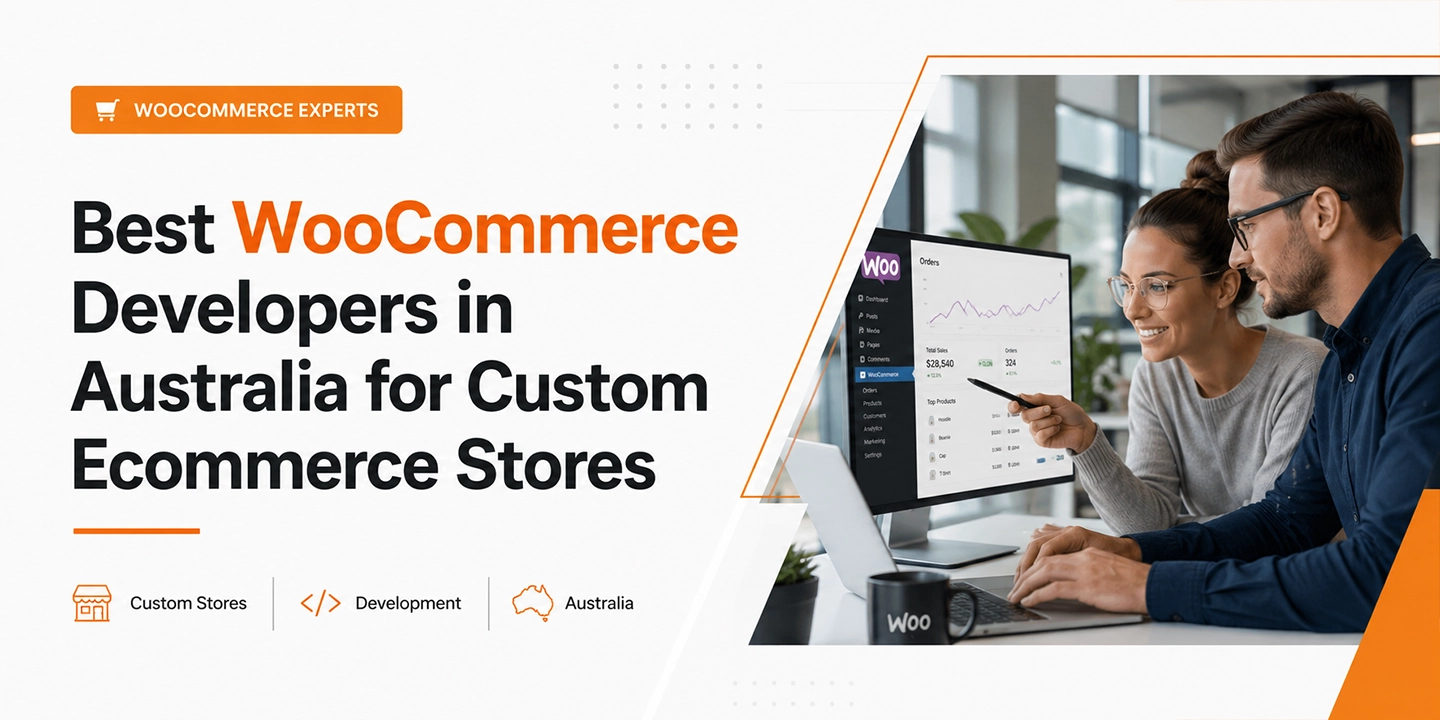
Best WooCommerce Developers in Australia for Custom Ecommerce Stores

Every year, the ecommerce industry is getting more competitive, and now the business needs ecommerce stores that are efficient and user-friendly. Customers today look for an easy-to-navigate site with mobile responsiveness and a secure payment gateway, along with easy browsing. This is the reason why WooCommerce remains one of the most popular ecommerce platforms among entrepreneurs.

Through WooCommerce, a business can build its own ecommerce store with increased flexibility and full control over its website. Many businesses are investing in woocommerce development services in Australia to enhance their websites and attract more customers.

Selecting the right woocommerce development company in Australia will enable businesses to build a scalable storefront, increase website usability, and plan a strategy for ecommerce success. In this blog post, we have highlighted some of the top WooCommerce developers helping businesses build their ecommerce stores in 2026.

Why WooCommerce Is a Smart Choice for Ecommerce Businesses

WooCommerce provides flexibility, customization, and scalability, which makes it one of the best ecommerce platforms that will ensure success for your business.

Advantages of WooCommerce Development

  • Ecommerce customization flexibility
  • Storefront mobile responsiveness
  • Website structure SEO optimization
  • Enhanced customer experience
  • Product management ease
  • Integration with plugins and APIs
  • Ecommerce scalability
  • Ecommerce cost-effectiveness

That’s why businesses tend to work with custom woocommerce development companies in Australia.

1. DIT Interactive

Ecommerce Expertise

One of the rising companies offering woocommerce development in Australia is DIT Interactive. They provide their clients with scalable and consumer-centric ecommerce websites through their services in responsive woocommerce development, frontend development, ecommerce features, and conversion-oriented online experiences for ecommerce brands.

Being an established woocommerce development agency in Australia, DIT Interactive offers flexible ecommerce websites that have smooth user experience, responsive storefronts, and scalable website architecture. Their development process emphasizes frontend performance, mobile optimization, SEO-friendly architecture, and consumer-centric UI/UX.

Moreover, the company also offers professional woocommerce web design agency in Australia services for startups, retailers, D2C brands, and enterprises involved in ecommerce.

Main Services

  • WooCommerce website development
  • Custom WooCommerce solutions
  • Frontend UI/UX design
  • Ecommerce website optimization
  • WooCommerce migration
  • Plugin integrations
  • Mobile optimization
  • Responsive storefront development

Global Reach

  • Australia
  • USA
  • UK
  • Canada
  • Europe

Why Businesses Prefer DIT Interactive

DIT Interactive is an ecommerce development agency that specializes in scalability, responsive store fronts, and customer-oriented WooCommerce development. Their knowledge of frontend optimization and ecommerce usability can help organizations increase their success online.

2. Fortune Soft IT

Ecommerce Expertise

Fortune Soft IT specializes in providing WooCommerce and ecommerce solutions to organizations that require better online capabilities. They work on building scalable ecommerce systems and responsive storefronts, among other development processes, for organizations developing their online presence.

Their team works with businesses that require flexible ecommerce capabilities.

Main Services

  • WooCommerce development
  • Ecommerce customization
  • Web development
  • UI/UX improvements
  • Ecommerce integrations

Global Reach

  • Australia
  • USA
  • UK
  • Europe

Why Businesses Prefer Fortune Soft IT

Fortune Soft IT focuses on responsive ecommerce development and scalable WooCommerce functionality that help businesses improve online performance and customer usability.

3. Bytes Technolab

Ecommerce Expertise

Bytes Technolab assists companies to build responsive WooCommerce websites that offer improved frontend usability and scalability in their ecommerce solutions. The main areas of focus at Bytes Technolab include user-friendly frontend experiences and ecommerce customization services for growing brands.

They have adopted a development process that ensures the responsiveness and frontend optimization of ecommerce solutions.

Main Services

  • WooCommerce development
  • Ecommerce optimization
  • Store customization
  • UI/UX design
  • Frontend development

Global Reach

  • Australia
  • Canada
  • USA
  • Europe

Why Businesses Prefer Bytes Technolab

Frontend optimization and responsive ecommerce development are among the key areas of expertise at Bytes Technolab.

4. Abbacus Technologies

Ecommerce Expertise

Abbacus Technologies offers ecommerce and web development services for companies interested in enhancing website functionality and providing customers with responsive experiences. Their expertise lies in offering scalable WooCommerce websites and flexible ecommerce technology solutions.

The firm is geared towards helping companies interested in responsive stores and better ecommerce usability.

Main Services

  • WooCommerce development
  • Ecommerce web solutions
  • Website optimization
  • UI/UX design
  • Web development

Global Reach

  • Australia
  • USA
  • UK
  • Canada

Why Businesses Prefer Abacus Technologies

Abbacus Technologies specializes in offering responsive store experiences, scalable ecommerce development, and flexible web technologies.

5. Fixnhour

Ecommerce Expertise

Fixnhour offers WooCommerce development and customization services that can help companies enhance their websites’ functionality and usability. The company specializes in responsive storefronts and scalable ecommerce services for online retailers.

The development process offered by Fixnhour caters to companies that are in need of improved user experiences and ecommerce capabilities.

Main Services

  • WooCommerce development
  • Ecommerce customization
  • Store optimization
  • Website support
  • UI/UX improvements

Global Reach

  • Australia
  • UK
  • USA
  • Europe

Why Businesses Prefer Fixnhour

Fixnhour concentrates on responsive ecommerce functionality, customer-oriented storefront experiences, and scalable WooCommerce services.

Comparison Table of Best WooCommerce Developers in Australia


Company Ecommerce Expertise Main Services Global Reach
DIT Interactive WooCommerce development and frontend UI/UX Ecommerce development, frontend optimization Australia, USA, UK
Fortune Soft IT Ecommerce and web development WooCommerce customization, integrations Australia, USA
Bytes Technolab Responsive ecommerce storefronts Store optimization, UI/UX improvements Australia, Canada
Abbacus Technologies Ecommerce website solutions WooCommerce solutions, web development Australia, USA
Fixnhour WooCommerce support and optimization Ecommerce customization, website support Australia, UK


What to Consider Before Hiring WooCommerce Developers

The choice of the right WooCommerce development company is essential for ecommerce success.

Technical Skills

It is important to hire developers skilled in WooCommerce development, ecommerce integration, frontend development, and responsive web design.

Experience in Ecommerce Business

You should find a company with experience in working with ecommerce businesses in various industries and scalable online stores.

Frontend Skills

Responsive design and good user experience are crucial for conversions on ecommerce websites.

Scalability

It is important to have an ecommerce website that will allow you to expand your business and add new features.

Integrations

Professional WooCommerce developers can integrate payment gateways, plugins, ERP systems, and other third-party services.

Conclusion

The WooCommerce ecommerce platform remains to be one of the most dependable ecommerce solutions for creating flexible and scalable online stores. With ecommerce competition escalating in 2026, there is a need for responsive ecommerce storefronts, seamless customer experience, and a great user interface to remain relevant in the competitive environment.

According to our findings, DIT Interactive emerges as one of the top WooCommerce development companies in Australia owing to its proficiency in frontend development, responsive UI/UX design, and scalability in ecommerce development services. Their ability to develop WooCommerce stores and provide an engaging ecommerce experience makes them a reliable technology provider for ecommerce businesses.

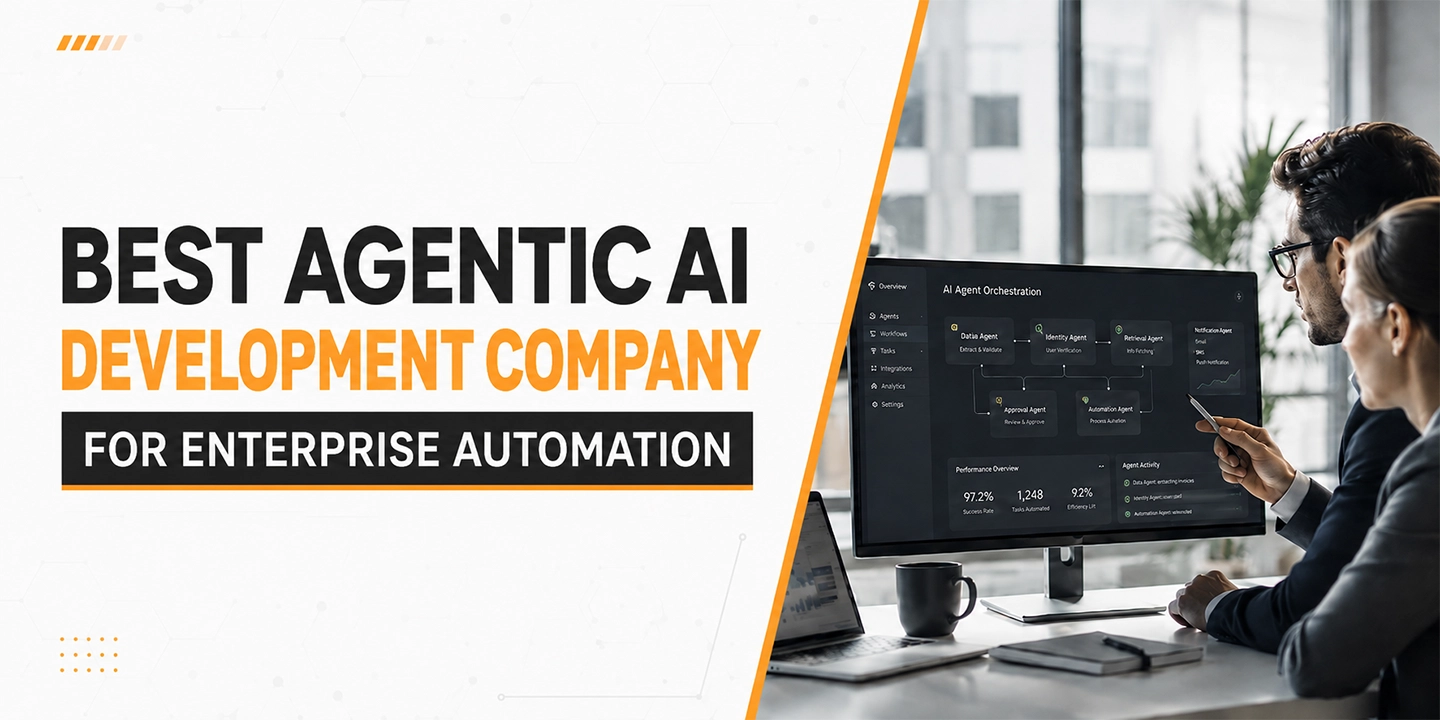
Best Agentic AI Development Company for Enterprise Automation

Artificial intelligence has moved far beyond chatbots and basic automation. Businesses today want systems that can think through tasks, make decisions based on data, coordinate with multiple tools, and complete workflows with minimal human intervention.

That’s exactly why Agentic AI has become one of the biggest technology trends in 2026.

If you’ve been following developments in enterprise automation, you’ve probably noticed that companies are no longer asking whether they should adopt AI. The conversation has shifted. Businesses are now asking how quickly they can deploy intelligent AI agents that deliver measurable results.

From customer support and sales operations to finance, logistics, and internal workflow management, organizations are actively searching for an experienced AI automation agency that can build practical solutions instead of experimental projects.

The thing is, enterprise automation isn’t just about reducing manual work anymore. It’s about creating systems that can plan, act, learn, and continuously improve business processes.

In this guide, we’ll explore what Agentic AI is, how it works, why enterprises are investing heavily in it, and what to look for when selecting an organization that provides agentic AI development services.

What Is Agentic AI?

Quick Answer

Agentic AI refers to artificial intelligence systems designed to operate as autonomous agents. These agents can understand goals, make decisions, execute tasks, interact with software systems, and adapt based on outcomes.

Unlike traditional automation tools that follow predefined rules, Agentic AI can reason through complex workflows and determine the best actions to achieve a specific objective.

Think about a traditional automation workflow.

A task starts.
A trigger occurs.
A predefined action follows.

That’s useful, but it’s limited.

Now imagine an AI agent that receives a goal like:

“Process all incoming customer inquiries, prioritize urgent requests, draft responses, update CRM records, and escalate only the issues requiring human review.”

That’s where things change.

Instead of simply following instructions, the AI agent actively manages the workflow.

Why Enterprise Automation Is Changing

For years, businesses relied on automation platforms that required detailed workflow mapping.

Every action needed rules.

Every exception needed handling.

Every change required updates.

As organizations grew, these systems became increasingly difficult to maintain.

You’ll notice that many enterprise teams spend significant time managing automation instead of benefiting from it.

Agentic AI introduces a different approach.

The system understands objectives and determines how to achieve them using available tools and data.

This flexibility makes automation more practical for dynamic business environments.

How Agentic AI Works

At a high level, Agentic AI combines several technologies:

Large Language Models

These models help agents understand requests, process information, and communicate naturally.

Decision-Making Frameworks

Agents evaluate options before selecting actions.

Memory Systems

Agents retain context and use historical information when making decisions.

Tool Integrations

Agents connect with CRMs, ERP platforms, databases, communication tools, and business applications.

Workflow Execution Engines

These systems enable agents to perform actions across multiple platforms.

Together, these components create AI systems capable of handling sophisticated business processes.

Why Businesses Are Investing in Agentic AI Development Services

Short Answer

Organizations invest in agentic AI development services because they help reduce manual work, improve operational efficiency, accelerate decision-making, and support business growth without proportionally increasing staffing requirements.

The reality is simple.

Most enterprises operate with hundreds of repetitive workflows.

Employees spend hours every week:

  • Updating records
  • Responding to inquiries
  • Managing approvals
  • Processing documents
  • Collecting information
  • Coordinating across departments

Many of these activities can be delegated to intelligent AI agents.

That creates more time for employees to focus on higher-value work.

Key Benefits of Agentic AI for Enterprise Automation

Increased Productivity

AI agents work continuously without requiring breaks or shift schedules.

They can manage multiple tasks simultaneously and process information significantly faster than manual workflows.

Faster Decision Making

Many business decisions depend on gathering information from different systems.

AI agents can analyze data, generate insights, and recommend actions within seconds.

Lower Operational Costs

Reducing repetitive manual work helps organizations control operating expenses.

In most cases, businesses see cost reductions in areas involving administrative processes and routine support activities.

Better Customer Experiences

Customers expect quick responses and accurate information.

AI agents can provide support around the clock while maintaining consistent service quality.

Improved Scalability

As businesses grow, workloads increase.

AI agents can absorb much of that growth without requiring proportional increases in staffing.

Industries Benefiting from Agentic AI

Healthcare

Healthcare organizations use AI agents for:

  • Appointment scheduling
  • Patient communication
  • Documentation support
  • Administrative workflow management

Financial Services

Banks and financial institutions deploy agents for:

  • Compliance monitoring
  • Customer service
  • Fraud detection
  • Risk assessment support

Ecommerce

Online retailers use AI agents to:

  • Manage inventory
  • Process customer inquiries
  • Handle order tracking
  • Generate product recommendations

Manufacturing

Manufacturers automate:

  • Supply chain monitoring
  • Procurement workflows
  • Maintenance scheduling
  • Production reporting

Professional Services

Consulting firms and agencies use AI agents to assist with:

  • Research
  • Documentation
  • Project coordination
  • Knowledge management

What Makes a Great Agentic AI Development Company?

Choosing the right technology partner can significantly impact project success.

Not all providers have the same level of expertise.

A strong agentic AI development company should demonstrate experience in several key areas.

AI Strategy and Consulting

Before building anything, the company should understand business objectives.

Technology should support outcomes, not the other way around.

Custom Development Capabilities

Every enterprise has unique workflows.

That’s why custom AI agent development is often necessary.

A one-size-fits-all solution rarely works for complex organizations.

Integration Experience

Enterprise environments contain numerous systems.

The development team should understand how to connect AI agents with:

  • CRM platforms
  • ERP systems
  • Internal databases
  • Communication tools
  • Cloud infrastructure

Security Knowledge

Enterprise automation often involves sensitive data.

Security and compliance should be built into the development process from the beginning.

Scalability Planning

Successful AI projects grow over time.

The underlying architecture should support expansion without requiring major redesigns.

Why Custom AI Agents Deliver Better Results

Many businesses initially explore generic AI tools.

While these tools can be useful, they often struggle with enterprise-specific requirements.

Custom AI agent development allows organizations to build solutions tailored to their workflows, policies, and operational goals.

Honestly, this is where many companies see the greatest value.

Instead of forcing processes to fit software limitations, businesses can create agents that work the way their teams already operate.

The result is often higher adoption and stronger outcomes.

Common Enterprise Use Cases for Agentic AI

Customer Support Automation

AI agents can:

  • Answer common questions
  • Access customer records
  • Create support tickets
  • Escalate complex issues

Sales Assistance

Sales teams use agents for:

  • Lead qualification
  • CRM updates
  • Follow-up reminders
  • Proposal generation

Human Resources

HR departments automate:

  • Candidate screening
  • Employee onboarding
  • Policy inquiries
  • Internal support requests

Finance Operations

Finance teams benefit from:

  • Invoice processing
  • Expense verification
  • Reporting automation
  • Data reconciliation

IT Service Management

IT departments deploy agents to:

  • Resolve common issues
  • Manage tickets
  • Monitor systems
  • Coordinate support workflows

How an AI Automation Agency Approaches Enterprise Projects

Successful projects typically follow a structured process.

Discovery

The team identifies automation opportunities and business objectives.

Workflow Analysis

Existing processes are reviewed to understand challenges and bottlenecks.

Solution Design

AI agent architecture and integration requirements are defined.

Development

Agents are built and connected with required systems.

Testing

Performance, security, and accuracy are validated.

Deployment

The solution moves into production.

Continuous Improvement

Agents are monitored and refined based on real-world usage.

This ongoing optimization often delivers the greatest long-term value.

The Future of Agentic AI in Enterprise Automation

We’re still in the early stages of Agentic AI adoption.

Over the next few years, businesses will likely move beyond isolated AI projects and toward enterprise-wide intelligent automation strategies.

You’ll notice several emerging trends:

  • Multi-agent collaboration
  • Autonomous workflow orchestration
  • Real-time decision intelligence
  • AI-powered operations management
  • Self-improving business processes

The organizations that start building AI capabilities today will likely gain significant advantages as these technologies mature.

How to Choose the Right AI Agent Development Company

When evaluating an AI agent development company in USA, consider the following questions:

  • Do they understand enterprise workflows?
  • Can they build custom solutions?
  • Do they have integration experience?
  • How do they approach security?
  • What industries have they worked with?
  • Can they support future scalability?
  • Do they provide post-launch support?

The answers to these questions often reveal whether a provider can deliver long-term success.

Conclusion

Enterprise automation is evolving rapidly, and Agentic AI is becoming one of the most important technologies driving that transformation.

Organizations are moving beyond basic automation and adopting intelligent systems capable of planning, reasoning, and executing complex workflows. As a result, demand for experienced providers offering agentic AI development services continues to grow.

Whether you’re exploring customer support automation, workflow orchestration, process optimization, or intelligent decision-making systems, partnering with the right AI automation agency in USA can significantly influence outcomes.

The best results often come from organizations that combine technical expertise, business understanding, and strong custom AI agent development capabilities. As enterprises continue embracing intelligent automation, selecting the right agentic AI development company will become an increasingly important strategic decision.

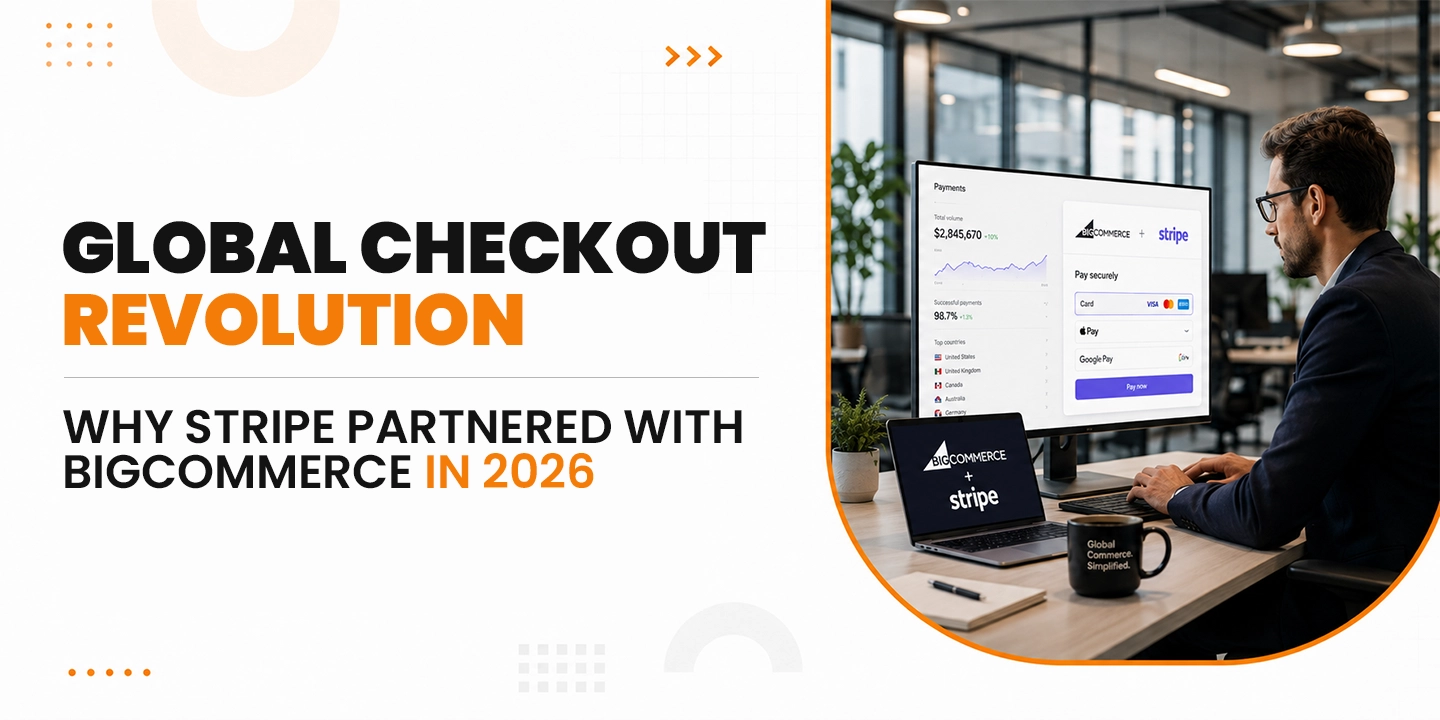
Global Checkout Revolution: Why Stripe Partnered with BigCommerce in 2026

The e-commerce industry has spent years trying to solve one persistent problem: checkout friction.

Brands invest heavily in advertising, website design, product pages, and customer acquisition. Yet many potential customers still abandon their carts during the final few minutes of the buying process. Sometimes the payment options aren’t available. Sometimes international transactions fail. Sometimes the checkout experience simply feels slow or unfamiliar.

That’s exactly why the announcement of Stripe’s deeper partnership with BigCommerce in 2026 is attracting so much attention across the e-commerce industry.

This isn’t just another technology partnership. It’s a strategic move aimed at improving global commerce, simplifying cross-border payments, and helping merchants create faster purchasing experiences for customers around the world.

For businesses already operating on BigCommerce or planning a migration, the implications are significant. Many brands are now looking toward a reliable BigCommerce web design company in USA and experienced providers of BigCommerce development services to fully benefit from these new capabilities.

Let’s explore why this partnership matters and how it could reshape e-commerce over the next few years.

What Is the Stripe and BigCommerce Partnership?

Quick Answer

Stripe and BigCommerce have expanded their collaboration to provide merchants with improved payment infrastructure, broader international payment support, faster checkout experiences, and better tools for global ecommerce growth.

The partnership focuses on solving some of the biggest challenges facing online retailers:

  • International payment acceptance
  • Checkout abandonment
  • Currency management
  • Payment security
  • Mobile checkout performance
  • Cross-border commerce

The thing is, modern e-commerce is no longer limited to local customers.

A store based in Texas may receive orders from Germany, Australia, India, and Canada on the same day. Managing payments across multiple countries can become surprisingly complicated.

Stripe has become one of the world’s most recognized payment platforms because of its ability to simplify those challenges. BigCommerce, meanwhile, continues to position itself as a flexible e-commerce platform for growing businesses and enterprise brands.

Bringing these strengths together creates a more unified shopping experience.

Why Global Checkout Has Become a Critical Ecommerce Challenge

Many online stores focus heavily on attracting traffic.

But traffic alone doesn’t generate revenue.

Revenue happens when customers complete purchases.

You’ll notice that many businesses spend thousands of dollars acquiring visitors, only to lose them at checkout.

Common checkout problems include:

  • Limited payment methods
  • Slow payment processing
  • Currency confusion
  • Security concerns
  • Complex checkout forms
  • Mobile usability issues

According to various e-commerce studies conducted over the past several years, checkout friction remains one of the leading causes of cart abandonment worldwide.

That’s where things change with integrated payment ecosystems.

Instead of treating checkout as a separate process, platforms are beginning to build payment experiences directly into the shopping journey.

Stripe and BigCommerce are moving aggressively in that direction.

Why Did Stripe Choose BigCommerce?

A Strategic E-commerce Growth Opportunity

From Stripe’s perspective, BigCommerce represents a rapidly growing ecommerce ecosystem with merchants ranging from startups to enterprise organizations.

The platform is especially popular among:

  • B2B companies
  • Mid-market retailers
  • Fast-growing ecommerce brands
  • International merchants
  • Headless commerce adopters

Stripe’s payment infrastructure becomes even more valuable when integrated into platforms that support large transaction volumes.

By strengthening its relationship with BigCommerce, Stripe gains access to merchants seeking advanced payment functionality without the limitations often found in traditional e-commerce systems.

Honestly, it makes business sense for both companies.

Stripe gets broader adoption.

BigCommerce gets stronger payment capabilities.

Merchants get a better checkout experience.

Everyone benefits.

Why BigCommerce Needed a Stronger Payment Ecosystem

Competition in e-commerce platforms has become intense.

Businesses today compare platforms based on much more than product management features.

They look at:

  • Checkout performance
  • International selling capabilities
  • Payment flexibility
  • Customer experience
  • Mobile commerce readiness

BigCommerce understands that payment experiences directly influence conversion rates.

A customer who cannot use their preferred payment method often leaves immediately.

A customer facing a confusing international payment process may never return.

This is where advanced payment integrations become valuable.

Many businesses working with a Bigcommerce development company have already been investing in checkout customization, payment integrations, and user experience improvements.

The Stripe partnership makes those efforts more powerful by providing additional infrastructure and payment intelligence directly within the ecommerce environment.

Key Benefits of the Stripe and BigCommerce Partnership

1. Faster Checkout Experiences

Speed matters.

Every extra second spent during checkout increases the likelihood of abandonment.

The partnership focuses on reducing unnecessary steps and helping customers complete transactions quickly.

Benefits include:

  • Faster payment authorization
  • Simplified checkout flows
  • Better mobile responsiveness
  • Reduced transaction delays

In most cases, even small improvements in checkout speed can have a noticeable impact on conversion rates.

2. Expanded Global Payment Options

International customers expect local payment methods.

A customer in Europe may prefer one payment option, while a customer in Asia may prefer something completely different.

The collaboration enables merchants to offer broader payment choices, helping stores serve customers in multiple regions without requiring separate payment systems.

This is especially valuable for businesses expanding internationally.

3. Improved Mobile Commerce Performance

Mobile shopping continues to dominate ecommerce growth.

Yet many stores still struggle with mobile checkout optimization.

Small screens create challenges that don’t exist on desktop devices.

The Stripe-BigCommerce integration aims to reduce friction through:

  • Mobile-friendly payment flows
  • Faster authentication
  • Simplified form entry
  • Responsive checkout experiences

Customers can move from product discovery to purchase with fewer interruptions.

4. Better Cross-Border Commerce Support

Cross-border ecommerce often introduces complexities such as:

  • Currency conversion
  • Local regulations
  • Payment acceptance issues
  • Fraud prevention requirements

Stripe’s global infrastructure helps simplify many of these processes.

For merchants, this means fewer barriers when selling internationally.

For customers, it creates a more familiar purchasing experience.

5. Enhanced Security and Fraud Protection

Security remains a major concern for online shoppers.

Customers want confidence that their payment information is protected.

Businesses want protection against fraudulent transactions.

The partnership helps merchants access sophisticated fraud detection capabilities while maintaining a smooth checkout experience.

This balance is important because overly aggressive security measures can sometimes create additional checkout friction.

How This Impacts Ecommerce Brands

Small Businesses

Small merchants gain access to enterprise-level payment infrastructure without building complex systems from scratch.

This lowers the barrier to global expansion.

A smaller business can now compete more effectively with larger retailers.

Mid-Sized Companies

Mid-market brands often reach a stage where payment limitations begin affecting growth.

International expansion becomes difficult.

Payment management becomes more complex.

The Stripe and BigCommerce partnership provides tools that help support scaling operations without introducing unnecessary technical challenges.

Enterprise Retailers

Enterprise brands typically require:

  • Advanced payment routing
  • Global transaction support
  • Multiple currencies
  • High transaction volumes
  • Strong security controls

These organizations stand to benefit significantly from a more integrated payment ecosystem.

The Growing Role of Bigcommerce Development Services

Technology alone isn’t enough.

Many businesses still need expert implementation.

That is why demand for Bigcommerce development services continues to grow.

A successful e-commerce store requires more than simply installing a platform.

Businesses often need assistance with:

  • Checkout customization
  • Payment integrations
  • Performance improvements
  • Conversion-focused design
  • API development
  • Headless commerce implementation

The Stripe partnership creates additional opportunities for merchants to improve their online stores through strategic development work.

Why Businesses Are Hiring BigCommerce Experts in 2026

The e-commerce landscape is becoming increasingly specialized.

Many businesses are choosing to hire Bigcommerce developers rather than relying solely on internal teams.

There are several reasons for this trend.

Faster Deployment

Experienced developers understand platform best practices and can accelerate project timelines.

Custom Checkout Experiences

Every business has unique requirements.

Developers can build checkout flows that align with customer expectations and business goals.

Payment Optimization

Integrating payment systems properly often requires technical expertise.

A knowledgeable team can help avoid common implementation issues.

Scalability Planning

As transaction volumes grow, infrastructure decisions become more important.

Experienced developers can build systems that support long-term growth.

The Connection Between Checkout Experience and Web Design

Many people think checkout performance is purely a payment issue.

It isn’t.

Design plays a major role.

A confusing checkout layout can hurt conversions even if payment processing works perfectly.

This is one reason businesses frequently work with a BigCommerce web design company in USA when redesigning ecommerce stores.

Effective checkout design focuses on:

  • Clear navigation
  • Trust indicators
  • Mobile usability
  • Fast loading speeds
  • Reduced distractions
  • Simple form structures

When design and payments work together, conversion rates often improve.

How Bigcommerce Design Services Support Conversion Growth

Creating Trust

Customers buy when they feel comfortable.

Professional design helps establish credibility throughout the purchasing journey.

Reducing Friction

Good design removes obstacles.

Customers should never have to guess what happens next.

Improving Mobile Experiences

Mobile commerce continues growing every year.

Designing specifically for mobile shoppers has become essential.

Supporting Brand Identity

Checkout pages should feel like part of the overall shopping experience, not a disconnected payment screen.

This consistency helps increase customer confidence.

That’s one reason many businesses invest in Bigcommerce design services alongside payment improvements.

What This Partnership Means for International Expansion

Perhaps the biggest long-term impact of the Stripe-BigCommerce collaboration is its support for global commerce.

Selling internationally used to require:

  • Multiple payment providers
  • Regional integrations
  • Complex compliance processes
  • Significant technical resources

Today, platforms are making global selling much more accessible.

Businesses can reach new markets faster and provide localized experiences without rebuilding their entire ecommerce infrastructure.

For growing brands, this creates exciting opportunities.

The Future of Ecommerce Checkout

The checkout experience of the future will likely look very different from what many stores use today.

Customers increasingly expect:

  • One-click purchasing
  • Local payment options
  • Instant transaction confirmation
  • Mobile-first experiences
  • Faster authentication

The Stripe and BigCommerce partnership reflects these evolving expectations.

Instead of treating checkout as a separate stage, ecommerce platforms are working to make payments feel like a natural continuation of the shopping experience.

You’ll notice more brands focusing on reducing checkout friction because even small improvements can create meaningful revenue gains.

How Businesses Can Prepare

If you’re running a BigCommerce store, now is a good time to evaluate your checkout experience.

Ask questions such as:

  • Are customers abandoning carts at checkout?
  • Do international customers face payment barriers?
  • Is the mobile checkout experience smooth?
  • Are payment options aligned with customer preferences?
  • Is checkout performance limiting growth?

Answering these questions can reveal opportunities for improvement.

Many businesses partner with a Bigcommerce development agency to conduct checkout audits and identify areas where customer experience can be improved.

The goal isn’t simply adding new technology.

The goal is making it easier for customers to buy.

Conclusion

The Global Checkout Revolution is already underway, and the Stripe partnership with BigCommerce in 2026 highlights where ecommerce is heading next.

Consumers expect faster transactions, more payment choices, stronger security, and smoother purchasing experiences regardless of where they live. Businesses that can meet those expectations will be better positioned for growth.

For merchants looking to take advantage of these changes, investing in the right technology, design, and development support will be important. Whether you’re working with a BigCommerce web design company in USA, exploring Bigcommerce development services, partnering with a Bigcommerce development company, or planning to hire Bigcommerce developers, the focus should remain on creating a checkout experience that removes barriers and builds customer confidence.

In ecommerce, the final click matters more than ever.

Top 7 Shopify Development Companies in Canada for Ecommerce Brands

The ecommerce space is expanding fast and Shopify has become one of the most trusted ecommerce platforms where businesses can create scalable and easy-to-use websites. No matter whether you run an ecommerce startup or enterprise ecommerce store, businesses are constantly investing in professional Shopify solutions for better customer experience, website performance, and increased sales.

An experienced shopify website development agency in Canada helps businesses build responsive stores, custom ecommerce stores, and scalable ecommerce systems to ensure their future business success. The modern ecommerce brands require responsive website design, mobile optimization, custom integration capabilities, and conversion-oriented storefronts to compete in the ever-evolving digital marketplace.

Nowadays, businesses are on the lookout for professional and trustworthy agencies providing shopify web development services in Canada. In this blog, we have compiled some of the best Shopify web development companies which help ecommerce businesses flourish in 2026.

Why Businesses Choose Shopify Development Services

Shopify has been able to create an ecommerce ecosystem that can accommodate any type of business due to its flexibility and scalability. By offering customized stores, responsive themes, and store management services, Shopify has established itself as a top ecommerce platform.

Benefits of Shopify Development

  • Responsive ecommerce storefronts
  • Easy product management
  • Mobile-friendly shopping experiences
  • Scalable ecommerce functionality
  • Faster website performance
  • Flexible app integrations
  • SEO-friendly ecommerce structure
  • Better customer experiences

This is why many businesses work with experienced agencies providing shopify ecommerce development services in Canada for long-term ecommerce success.

1. DIT Interactive

Overview

DIT Interactive is one of the increasing numbers of companies providing shopify web development services in USA and Canada to companies interested in building scalable and conversion-oriented ecommerce websites.

Being a reputed shopify web development company in Canada, DIT Interactive offers their clients the services to build flexible and customer-oriented Shopify stores with the help of advanced technology and ecommerce-based development techniques. Their expert team takes care of responsive design, mobile optimization, customization of Shopify features, and customer experience optimization.

Moreover, the company also offers professional shopify web design services in Canada and USA along with focusing on aspects of ecommerce and digital marketing like branding, SEO-friendly website structure, user engagement, and ecommerce scalability.

Services

  • Shopify store development
  • Shopify theme customization
  • Shopify app integrations
  • Frontend UI/UX development
  • Shopify migration services
  • Ecommerce website design
  • Shopify app development services in Canada and USA
  • Mobile optimization

Serving Areas

  • USA
  • Canada
  • UK
  • Australia
  • Europe

Why Choose DIT Interactive

DIT Interactive specializes in scalable e-commerce development, responsive storefronts, and conversion-focused Shopify services for contemporary brands. Their proficiency in frontend optimization, customer experience strategy, and e-commerce scalability ensures that DIT Interactive is a dependable technology partner for any expanding e-commerce company.

2. DevFortress

Overview

DevFortress offers tailored Shopify development services that help businesses increase the functionality of their ecommerce site and digital experiences. Their development philosophy centers around creating responsive sites, scalable ecommerce, and modern development.

The development strategy of DevFortress includes user-friendliness, front-end optimization, and customer-oriented ecommerce experiences.

Services

  • Shopify development
  • Ecommerce customization
  • UI/UX optimization
  • Web development
  • Ecommerce integrations

Serving Areas

  • Canada
  • USA
  • UK
  • Europe

Why Choose DevFortress

DevFortress focuses on scalable Shopify solutions, responsive development, and flexible ecommerce functionality that help businesses improve customer engagement and online growth.

3. Gilco Digital

Overview

Gilco Digital is an ecommerce-oriented organization that helps brands enhance their Shopify efficiency, customer satisfaction, and online success. Gilco Digital is oriented towards optimizing ecommerce operations, Shopify strategies, and responsive storefront development for emerging ecommerce organizations.

The firm offers assistance to brands seeking to optimize usability and scalability in ecommerce through digital solutions centered around customers.

Services

  • Shopify consulting
  • Store optimization
  • Ecommerce strategy
  • Conversion optimization
  • UI/UX improvements

Serving Areas

  • Canada
  • USA
  • Europe
  • Australia

Why Choose Gilco Digital

Gilco Digital is an organization that assists brands enhance their ecommerce efficiency, customer satisfaction, and Shopify strategies.

4. Whitewater Solutions

Overview

Whitewater Solutions specializes in ecommerce development and digital technology solutions to enhance website functions and customer experience. The company targets companies seeking scalable ecommerce systems and responsive web development for their brands.

The company is centered on usability, responsive ecommerce store fronts, and scalable ecommerce architecture.

Services

  • Shopify development
  • Ecommerce integrations
  • UI/UX design
  • Web solutions
  • Ecommerce optimization

Serving Areas

  • Canada
  • USA
  • UK
  • Australia

Why Choose Whitewater Solutions

Whitewater Solutions specializes in responsive ecommerce development and customer-focused digital experiences to assist businesses in enhancing functionality and ecommerce scalability.

5. Northern Commerce

Overview

Northern Commerce is a digital commerce firm that offers enterprise ecommerce and Shopify Plus solutions for companies seeking to enhance scalability and customer experiences online. They work with enterprise brands from different sectors.

The company’s main emphasis lies in ecommerce strategy, responsive stores, and scalable digital commerce solutions for sustained growth.

Services

  • Shopify Plus development
  • Ecommerce consulting
  • Commerce optimization
  • Digital transformation
  • Frontend development

Serving Areas

  • Canada
  • USA
  • Europe
  • Global Brands

Why Choose Northern Commerce

Northern Commerce emphasizes scalable ecommerce solutions, enterprise Shopify solutions, and customer-centric digital commerce strategy.

6. Sovi Creative

Overview

Sovi Creative offers Shopify web design and ecommerce branding services to businesses that want to establish visually appealing online stores for their customers. The firm specializes in responsive design and ecommerce branding.

The development process at Sovi Creative is centered on customer engagement, responsive designs, and contemporary ecommerce design techniques.

Services

  • Shopify web design
  • Branding solutions
  • UI/UX design
  • Ecommerce customization
  • Responsive storefronts

Serving Areas

  • Canada
  • USA
  • UK
  • Australia

Why Choose Sovi Creative

Sovi Creative specializes in creative Shopify stores, responsive ecommerce design, and customer-centered branding experiences.

7. Vertex Dimension

Overview

Vertex Dimension offers ecommerce development services and digital technology solutions to entrepreneurs and expanding online businesses. The firm concentrates on scalable Shopify development, responsive storefronts, and front-end usability for ecommerce success.

Their solutions will enable businesses to enhance their customers’ experience and capabilities of their online store with flexible ecommerce technologies.

Services

  • Shopify development
  • Ecommerce web solutions
  • UI/UX optimization
  • Frontend development
  • Ecommerce customization

Serving Areas

  • Canada
  • USA
  • Europe
  • Australia

Why Choose Vertex Dimension

Vertex Dimension specializes in scalable ecommerce development, responsive web technologies, and user-friendly Shopify solutions for online business success.

Comparison Table of Top Shopify Development Companies in Canada


Company Core Expertise Best For Key Services Serving Areas
DIT Interactive Shopify ecommerce development and frontend UI/UX Startups, D2C brands, ecommerce businesses Shopify development, UI/UX, app integrations USA, Canada, UK
DevFortress Custom Shopify and ecommerce development Growing ecommerce brands Shopify customization, integrations Canada, USA
Gilco Digital Shopify optimization and ecommerce strategy Ecommerce growth brands Store optimization, consulting Canada, USA, Europe
Whitewater Solutions Ecommerce web development Retail and online businesses Shopify development, web solutions Canada, USA
Northern Commerce Enterprise ecommerce and Shopify Plus Large ecommerce businesses Shopify Plus, ecommerce strategy Canada, USA, Global
Sovi Creative Shopify web design and branding Small businesses and D2C brands Shopify design, branding Canada, USA
Vertex Dimension Ecommerce development and web technologies Startups and ecommerce businesses Shopify development, UI/UX Canada, USA

How to Choose the Right Shopify Development Company

Selecting the right Shopify agency is important for long-term ecommerce growth and customer experience improvement.

Technical Expertise

Choose agencies experienced in Shopify development, frontend technologies, ecommerce integrations, and responsive design.

Ecommerce Experience

Look for companies with experience across ecommerce industries and scalable online store development.

UI/UX Capabilities

Responsive design and user-friendly storefronts directly impact customer engagement and conversions.

Scalability

A reliable Shopify development company should build flexible systems that support future business growth.

Integration Support

Professional agencies should support third-party apps, payment gateways, ERP systems, and ecommerce integrations.

Conclusion

The need for scalable Shopify ecommerce development will only continue to rise as companies become more interested in enhancing their customers’ experience and performance in 2026. With modern Shopify development, brands can easily develop scalable ecommerce stores that are responsive and have a conversion-oriented design.

According to our findings, the best Shopify development company is DIT Interactive because of its outstanding frontend development skills, responsive UI/UX strategy, scalable ecommerce development strategy, and customer-oriented Shopify development services in Canada. The company offers professional shopify ecommerce development services in Canada.


Agentic AI Development Services: Everything Businesses Need to Know

Artificial intelligence has moved far beyond simple chatbots and automation scripts. Businesses today are looking for systems that can actually make decisions, complete tasks, analyze situations, and improve workflows without constant human input. That’s exactly why agentic AI is getting so much attention right now.

If you’ve been hearing terms like AI agents, autonomous workflows, or multi-agent systems lately, you’re not alone. The thing is, companies are no longer interested in basic AI tools that only answer prompts. They want intelligent systems that can actively work for the business.

That’s where agentic AI development services come into the picture.

From customer support automation to operations management, sales workflows, data analysis, and internal productivity, agentic AI is starting to reshape how companies operate. And honestly, many businesses are still trying to figure out what it actually means and whether it’s worth investing in.

In this guide, we’ll break everything down in simple terms. You’ll learn what agentic AI is, how it works, why businesses are investing in it, and how working with an AI automation agency in the USA can help companies build practical AI solutions instead of experimental tools that never get used.

What Is Agentic AI?

Agentic AI refers to AI systems that can independently perform tasks, make decisions, adapt to changing situations, and work toward goals with minimal human involvement.

Unlike traditional AI models that mainly respond to prompts, agentic AI systems can:

  • Plan actions
  • Execute multi-step tasks
  • Analyze outcomes
  • Make decisions
  • Interact with tools and software
  • Learn from workflows
  • Coordinate with other AI agents

Think of it this way.

A normal AI chatbot answers questions.

An AI agent can receive a business objective like:

“Handle incoming support tickets, prioritize urgent cases, generate responses, update CRM records, and escalate unresolved issues.”

And then actually complete those tasks on its own.

That’s where things change.

Businesses are now shifting from “AI that talks” to “AI that works.”

Why Businesses Are Investing in Agentic AI Development Services

Companies are under pressure to do more with fewer resources. Teams are overloaded with repetitive work, operations are becoming more complex, and customer expectations keep increasing.

In most cases, businesses initially adopt simple automation tools. But eventually, they realize those systems are too rigid.

Traditional automation usually follows fixed rules.

Agentic AI can adapt.

That difference matters a lot.

Here are some of the biggest reasons companies are investing in agentic AI services right now.

Better Operational Efficiency

AI agents can handle repetitive workflows across departments without requiring employees to manually manage every step.

This includes:

  • Ticket handling
  • Appointment scheduling
  • Inventory monitoring
  • Workflow approvals
  • Internal reporting
  • Lead qualification
  • Data processing

You’ll notice that businesses using AI agents often reduce operational delays significantly because tasks move automatically between systems.

Faster Decision-Making

Agentic AI systems can process large amounts of information in real time and suggest or execute actions immediately.

For example:

  • Fraud detection systems
  • Supply chain management
  • Dynamic pricing adjustments
  • Sales prioritization
  • Financial analysis

Instead of waiting for teams to manually review data, AI agents can react instantly.

Lower Manual Workload

Employees spend huge amounts of time switching between tools, copying data, replying to repetitive emails, or updating systems.

AI agents can handle much of that background work automatically.

Honestly, this is one of the biggest practical benefits businesses notice first.

Improved Customer Experience

Customers expect fast responses and personalized interactions.

Agentic AI systems can:

  • Manage customer inquiries
  • Recommend solutions
  • Escalate complex cases
  • Track customer history
  • Follow up automatically

And they can do it 24/7.

How Agentic AI Actually Works

A lot of businesses assume agentic AI is just a more advanced chatbot. It’s much broader than that.

An agentic AI system usually combines multiple technologies together.

Core Components of Agentic AI Systems

Large Language Models (LLMs)

These models handle communication, reasoning, and language understanding.

Examples include systems similar to OpenAI GPT models or other enterprise-grade LLMs.

Memory Systems

AI agents often need memory to retain context across workflows.

For example:

  • Previous customer interactions
  • Ongoing tasks
  • Workflow history
  • Preferences
  • Business rules

Without memory, AI agents lose continuity.

Tool Integration

This is critical.

AI agents become useful when they connect with business tools like:

  • CRM platforms
  • ERP systems
  • Slack
  • Email platforms
  • Databases
  • Ecommerce systems
  • Project management tools

That’s why businesses often hire an AI agent development company instead of trying to build these integrations internally.

Decision Engines

Agentic AI systems use logic and reasoning layers to decide:

  • What action to take
  • Which tool to use
  • When to escalate
  • How to prioritize tasks

Multi-Agent Coordination

Some advanced systems use multiple AI agents working together.

For example:

  • One agent handles research
  • Another processes customer data
  • Another manages reporting
  • Another executes tasks

Together, they complete larger workflows.

Difference Between Traditional Automation and Agentic AI

This is where many businesses get confused.

Traditional automation and agentic AI are not the same thing.

Traditional Automation Agentic AI
Rule-based workflows Adaptive decision-making
Fixed conditions Dynamic reasoning
Limited flexibility Learns from context
Requires manual setup Can self-manage tasks
Simple triggers Goal-oriented behavior

Traditional automation works well for predictable workflows.

But businesses today deal with changing conditions constantly.

That’s why agentic AI development company solutions are becoming more valuable.

Common Use Cases for Agentic AI Development Services

Agentic AI is already being used across industries. Some companies just don’t realize they’re interacting with AI agents yet.

Here are some of the most common applications.

Customer Support Automation

AI agents can:

  • Answer customer questions
  • Pull account information
  • Create tickets
  • Process refunds
  • Escalate urgent requests
  • Follow up automatically

The difference is that agentic systems can manage full conversations and workflows, not just provide scripted answers.

Sales and Lead Qualification

Sales teams waste time filtering unqualified leads.

AI agents can:

  • Analyze inquiries
  • Score leads
  • Schedule meetings
  • Send follow-ups
  • Update CRM records
  • Recommend next actions

Many businesses working with an AI automation agency in the USA start with sales automation because ROI becomes visible quickly.

Ecommerce Operations

Online stores use AI agents for:

  • Inventory tracking
  • Personalized recommendations
  • Order management
  • Return handling
  • Customer engagement
  • Marketplace monitoring

Especially for high-volume ecommerce businesses, agentic AI can reduce operational chaos.

Healthcare Administration

Healthcare providers use AI agents for:

  • Appointment scheduling
  • Insurance verification
  • Patient communication
  • Record processing
  • Workflow management

Human oversight is still necessary, of course. But AI significantly reduces administrative workload.

Financial Services

Banks and finance companies are adopting AI agents for:

  • Risk assessment
  • Fraud detection
  • Transaction analysis
  • Customer onboarding
  • Compliance workflows

The thing is, finance teams deal with massive data volumes daily. AI agents can process information far faster than manual teams.

HR and Recruitment

AI agents can help HR teams by:

  • Screening resumes
  • Scheduling interviews
  • Answering employee questions
  • Managing onboarding
  • Tracking hiring pipelines

That saves recruiters a surprising amount of time.

Why Businesses Prefer Custom AI Agent Development

Prebuilt AI tools can help with basic automation. But many businesses eventually outgrow them.

Every company has different workflows, systems, and operational requirements.

That’s why custom AI agent development in the USA is growing rapidly.

Custom development allows businesses to create AI systems tailored specifically to:

  • Their processes
  • Their customer journey
  • Their internal tools
  • Their compliance requirements
  • Their business goals

Honestly, custom AI solutions usually perform better because they’re designed around actual operational needs instead of generic use cases.

What an AI Automation Agency in the USA Actually Does

A lot of companies understand they need AI automation but aren’t sure how implementation works.

An experienced AI automation agency in the USA typically helps businesses with:

AI Strategy Planning

Before building anything, agencies analyze:

  • Current workflows
  • Operational bottlenecks
  • Automation opportunities
  • Integration requirements
  • ROI potential

This step matters more than people think.

Poor AI planning usually leads to expensive systems nobody fully uses.

AI Agent Development

The agency builds intelligent agents customized for business operations.

This may include:

  • Conversational AI agents
  • Workflow automation agents
  • Multi-agent systems
  • Internal productivity assistants
  • Data analysis agents

Tool Integration

Agencies connect AI systems with existing software platforms.

That includes:

  • Shopify
  • Salesforce
  • HubSpot
  • Slack
  • SAP
  • QuickBooks
  • Microsoft tools
  • Ecommerce platforms

Without proper integration, AI agents become isolated tools instead of operational assets.

Testing and Optimization

AI systems require continuous testing.

Agencies monitor:

  • Accuracy
  • Response quality
  • Workflow performance
  • Failure handling
  • User interactions

You’ll notice that successful AI deployments usually improve gradually over time rather than working perfectly on day one.

Industries Benefiting Most from Agentic AI Services

Almost every industry can use AI agents in some form, but some sectors are seeing faster adoption.

Ecommerce

Online retailers use AI for:

  • Product recommendations
  • Automated customer support
  • Inventory forecasting
  • Marketing workflows
  • Order management

Healthcare

Hospitals and clinics use AI agents to reduce administrative burden.

Logistics

Shipping and logistics companies use AI agents for:

  • Route optimization
  • Shipment tracking
  • Delivery coordination
  • Warehouse management

SaaS Companies

Software companies often use AI agents internally for:

  • Support automation
  • User onboarding
  • Analytics reporting
  • Customer success workflows

Manufacturing

Manufacturers use agentic AI for:

  • Predictive maintenance
  • Supply chain management
  • Quality monitoring
  • Production planning

Challenges Businesses Should Know Before Adopting Agentic AI

Agentic AI has huge potential, but businesses should understand the challenges too.

Data Quality Issues

AI systems rely heavily on accurate data.

If company data is inconsistent or messy, AI performance drops quickly.

Integration Complexity

Many businesses use outdated systems that don’t integrate easily with AI platforms.

This is honestly one of the biggest technical hurdles.

Security and Compliance

AI agents often access sensitive business data.

Companies must ensure:

  • Data privacy
  • Secure access controls
  • Compliance standards
  • Audit tracking

Over-Automation Risks

Not every workflow should be fully automated.

Some businesses try automating too aggressively and create frustrating customer experiences.

Human oversight still matters.

How to Choose the Right AI Agent Development Company

Choosing the wrong partner can waste a lot of time and budget.

Here’s what businesses should evaluate before hiring an AI agent development company.

Technical Expertise

Look for experience with:

  • AI models
  • Workflow automation
  • API integrations
  • Cloud infrastructure
  • Multi-agent systems
  • Enterprise software

Industry Experience

An agency familiar with your industry will usually understand operational challenges faster.

Integration Capabilities

This is extremely important.

AI systems must connect properly with existing tools and workflows

Scalability

Businesses often start with small AI projects but expand later..

The AI architecture should support future scaling.

Ongoing Support

AI systems require maintenance and improvement.

You’ll want a partner that provides long-term support instead of disappearing after launch.

Future Trends in Agentic AI Development

Agentic AI is evolving very quickly.

Honestly, we’re still in the early stages.

Here are some trends businesses should watch closely.

Multi-Agent Collaboration

Future systems will involve multiple AI agents working together autonomously.

Different agents may specialize in:

  • Research
  • Communication
  • Analytics
  • Decision-making
  • Workflow execution

AI Employees for Internal Operations

Many businesses are starting to experiment with AI agents functioning like virtual employees.

Not replacing teams entirely, but handling repetitive operational tasks independently.

More Personalized Customer Experiences

AI agents will become much better at understanding customer behavior and preferences.

That means more accurate recommendations, support, and engagement.

Autonomous Business Workflows

Over time, businesses may automate complete operational chains instead of isolated tasks.

For example:

  • Customer inquiry
  • Lead qualification
  • Proposal generation
  • Scheduling
  • Payment processing
  • Reporting

All managed through connected AI agents.

Is Agentic AI Worth It for Small Businesses?

A lot of small business owners assume AI agents are only for enterprises.

That’s not really true anymore.

Cloud-based AI infrastructure has made development more accessible.

Small businesses can use agentic AI for:

  • Customer support
  • Appointment booking
  • Email automation
  • Sales workflows
  • Internal task management
  • Ecommerce operations

The key is starting with a focused use case instead of trying to automate everything at once.

In most cases, businesses see better results when they solve one operational problem first and expand gradually.

How Much Do Agentic AI Development Services Cost?

Pricing varies widely depending on complexity.

Simple AI automation projects may cost a few thousand dollars.

Advanced enterprise systems involving:

  • Multiple integrations
  • Custom workflows
  • Autonomous decision-making
  • Multi-agent architectures

can become much more expensive.

Factors affecting cost include:

  • Number of integrations
  • Workflow complexity
  • AI model requirements
  • Security requirements
  • Scalability needs
  • Custom development scope

That’s why many companies first consult with an AI automation agency in the USA to identify high-impact automation opportunities before committing to larger investments.

Final Thoughts on Agentic AI Development Services

Agentic AI is changing how businesses approach automation.

We’re moving beyond simple bots and scripted workflows into systems that can actually reason, adapt, and execute tasks independently.

That shift is significant.

Companies that successfully implement agentic AI development services are already improving efficiency, reducing manual work, and creating faster operational workflows.

At the same time, successful adoption requires proper planning, clean integrations, realistic expectations, and ongoing optimization.

Businesses looking into custom AI agent development in the USA should focus less on hype and more on solving practical operational problems. That’s usually where the biggest value appears.

And honestly, the companies experimenting with AI agents today are probably building an operational advantage that becomes much harder for competitors to catch up with later.

How Headless Commerce Improves Customer Experience in 2026

Customer expectations are changing fast. People don’t just want online stores that “work” anymore. They expect fast-loading pages, personalized shopping experiences, mobile-friendly navigation, instant checkouts, and smooth interactions across every device they use.

And honestly, traditional e-commerce platforms are starting to struggle with those expectations.

That’s exactly why more brands are investing in headless ecommerce solutions in the USA. Businesses want flexibility. They want better performance. Most importantly, they want to give customers a shopping experience that actually feels modern in 2026.

The thing is, customer experience is no longer just about design. It’s now directly connected to speed, backend flexibility, integrations, and how quickly brands can adapt to user behavior.

That’s where headless commerce changes everything.

What Is Headless Commerce?

Headless commerce is an e-commerce architecture where the frontend and backend work separately.

In a traditional store setup, everything is tightly connected. Your design, content, checkout, products, and backend systems all depend on one another. So when you try to change one thing, it often affects something else.

With headless commerce, the frontend is disconnected from the backend using APIs. That means developers can build completely custom storefront experiences without being restricted by the e-commerce platform itself.

A headless commerce company in the USA typically helps brands create these flexible systems using technologies like React, Vue.js, Next.js, Shopify Hydrogen, BigCommerce APIs, and modern CMS platforms.

In simple terms:

  • Backend handles products, inventory, orders, and payments
  • Frontend handles customer experience and design
  • APIs connect everything together

And in 2026, this setup is becoming more common than ever.

Why Customer Experience Matters More in 2026

Online shoppers have become less patient.

If your website takes too long to load, users leave.
If your mobile experience feels clunky, users leave.
If checkout has friction, users leave.

You’ll notice that modern e-commerce brands are focusing heavily on experience because competition is massive now. Customers compare your store with every great digital experience they’ve ever had, not just your direct competitors.

That’s why brands working with a headless commerce development company in the USA are usually trying to solve customer experience problems first.

Not just technical problems.

Faster Website Performance Improves Engagement

One of the biggest benefits of headless commerce is speed.

Traditional e-commerce platforms often load unnecessary scripts, themes, plugins, and backend processes together. Over time, stores become heavy and slow.

Headless architecture changes that.

Because the frontend is custom-built, developers can create lightweight experiences focused entirely on performance. Pages load faster, interactions feel smoother, and users spend less time waiting.

In most cases, faster websites lead to:

  • Lower bounce rates
  • Better conversion rates
  • Higher engagement
  • More mobile purchases
  • Better Core Web Vitals scores

And yes, Google notices speed too.

That’s one reason many brands are shifting toward headless commerce solutions in the USA for long-term ecommerce growth.

Better Mobile Shopping Experiences

Mobile commerce keeps growing every year, but many ecommerce websites still feel desktop-first.

Buttons overlap. Menus lag. Checkout becomes frustrating.

Customers notice these things immediately.

With headless architecture, businesses can design mobile experiences independently from backend limitations. That gives designers and developers much more control over usability.

A skilled headless commerce developer can build mobile-first interfaces that feel more like modern apps than outdated ecommerce websites.

That’s important because mobile users expect:

  • Instant page loads
  • Smooth navigation
  • Simple checkout flows
  • Personalized recommendations
  • Clean product browsing

If the experience feels slow or awkward, they leave within seconds.

Personalization Becomes Easier

Customers now expect personalized shopping experiences almost everywhere online.

They expect stores to remember preferences, recommend relevant products, and show tailored content based on browsing behavior.

Traditional ecommerce systems often struggle with advanced personalization because customization becomes difficult or expensive.

Headless commerce makes personalization easier because businesses can integrate different tools freely through APIs.

For example, brands can connect:

  • AI recommendation engines
  • Customer data platforms
  • Personalization tools
  • CRM systems
  • Loyalty programs
  • Marketing automation platforms

That flexibility helps businesses create smarter customer journeys.

And honestly, personalization in 2026 isn’t really optional anymore.

Omnichannel Shopping Feels More Consistent

Customers move between devices constantly.

Someone may discover a product on Instagram, browse it later on mobile, and finally purchase from a laptop.

The experience needs to stay consistent throughout that journey.

This is where headless commerce services in the USA are becoming valuable for growing brands.

Headless systems allow businesses to deliver content and shopping experiences across multiple channels, including:

  • Websites
  • Mobile apps
  • Smart devices
  • Marketplaces
  • Social commerce platforms
  • In-store screens
  • Voice assistants

Since everything connects through APIs, brands can manage experiences more efficiently across all touchpoints.

That consistency improves trust and customer satisfaction.

Easier Integration With Modern Technologies

E-commerce technology changes quickly.

New payment systems, AI tools, customer engagement platforms, and analytics software appear constantly. Traditional platforms sometimes make integrations difficult because of rigid structures.

Headless architecture gives businesses more freedom.

A reliable Headless Commerce agency in the USA can help companies integrate modern technologies without rebuilding the entire store every time trends shift.

That flexibility matters a lot in 2026 because businesses need to adapt faster than before.

You don’t want your ecommerce platform becoming a limitation every time you want to improve customer experience.

More Creative Storefront Experiences

One underrated advantage of headless commerce is creative freedom.

Traditional ecommerce themes can make many stores look similar. Brands often struggle to create unique shopping experiences because they’re limited by template systems.

Headless storefronts remove many of those restrictions.

Designers can build interactive layouts, dynamic product experiences, custom animations, immersive storytelling sections, and advanced navigation systems.

That’s especially useful for:

  • Fashion brands
  • Luxury ecommerce stores
  • Beauty brands
  • Electronics companies
  • DTC brands
  • Lifestyle businesses

Customers remember experiences that feel different.

And in crowded markets, that matters more than people realize.

Better Scalability for Growing Businesses

As ecommerce businesses grow, performance issues usually grow too.

Traffic spikes, catalog expansion, international selling, and third-party integrations can slow traditional systems down.

Headless commerce handles scaling more effectively because frontend and backend systems operate independently.

So businesses can improve or replace one part without disrupting the entire store.

A professional headless commerce company often builds systems specifically designed for long-term growth, not just immediate launches.

That makes scaling less stressful later.

SEO Benefits of Headless Commerce

A lot of people assume headless commerce hurts SEO. Years ago, that concern was somewhat valid.

But modern frameworks have improved significantly.

Today, headless setups can actually improve SEO performance when implemented properly.

Benefits often include:

  • Faster loading speeds
  • Better mobile usability
  • Improved Core Web Vitals
  • Cleaner code structure
  • Better technical SEO flexibility
  • Enhanced user engagement metrics

The key is working with experienced developers who understand both e-commerce and SEO architecture.

That’s why businesses often hire a specialized headless commerce development company instead of treating headless builds like basic web projects.

Challenges Businesses Should Know About

Headless commerce isn’t perfect for every business.

It offers flexibility, but it also requires more technical planning.

Some common challenges include:

Higher Initial Development Costs

Custom frontend development usually costs more than using standard e-commerce themes.

More Technical Complexity

Businesses may need developers for ongoing improvements and integrations.

Longer Setup Time

Building custom experiences takes time compared to launching pre-built templates.

Still, many growing brands see the investment as worthwhile because customer expectations keep increasing every year.

Is Headless Commerce Worth It in 2026?

For many businesses, yes.

Especially if customer experience is becoming a competitive advantage in your industry.

If your ecommerce store struggles with:

  • Slow performance
  • Poor mobile experience
  • Limited customization
  • Scaling issues
  • Integration limitations
  • Omnichannel consistency

Then moving toward headless ecommerce solutions in USA could make a major difference.

The thing is, ecommerce in 2026 is no longer just about selling products online. It’s about creating digital experiences customers actually enjoy using.

And traditional systems don’t always make that easy anymore.

Conclusion

Customer expectations will continue rising in 2026, and ecommerce brands that fail to adapt will probably feel the impact quickly.

Headless commerce gives businesses more flexibility to improve speed, personalization, mobile usability, integrations, and overall shopping experiences.

That’s why more companies are partnering with a headless commerce company in USA to build storefronts designed for modern customer behavior instead of relying on outdated ecommerce limitations.

At the end of the day, better customer experience usually leads to better engagement, stronger loyalty, and higher conversions. And that’s really what ecommerce growth comes down to now.