Custom BigCommerce Development vs Pre-Built Themes: Which Is Better for US Ecommerce Businesses?
For most growing US ecommerce businesses, Custom BigCommerce Development is the better long-term investment when branding, conversion optimization, scalability, integrations, and customer experience directly impact revenue.
Pre-built BigCommerce themes are ideal for startups, small catalogs, and businesses that need to launch quickly with a limited budget. However, as revenue grows and operational requirements become more complex, custom development typically delivers stronger performance, flexibility, and business control.
The right choice depends on your budget, growth plans, customer expectations, and technical requirements.
Why This Decision Matters in 2026
Ecommerce competition in the United States has changed dramatically.
Customers expect:
- Fast loading websites
- Mobile-first shopping experiences
- Personalized experiences
- Smooth checkout processes
- Easy navigation
- Consistent branding
According to Adobe Analytics, US consumers spent a record $11.8 billion online during Black Friday 2025, demonstrating the continued growth of digital commerce and the importance of high-performing ecommerce websites. AI-driven shopping experiences also played a significant role in driving traffic and purchases. (Reuters)
The thing is, customers rarely care whether you’re using a template or custom code.
They care about the experience.
And that experience directly impacts:
- Conversion rates
- Revenue
- Customer retention
- Average order value
- Brand perception
That’s why choosing between a pre-built theme and custom BigCommerce development deserves careful evaluation.
What Is Custom BigCommerce Development?
Custom BigCommerce Development refers to building or modifying a BigCommerce store specifically around your business requirements instead of relying solely on a standard theme.
This can include:
- Custom storefront design
- Advanced checkout experiences
- Third-party integrations
- Custom functionality
- B2B features
- Headless commerce implementations
- API-based solutions
- Performance improvements
Unlike off-the-shelf templates, custom development focuses on creating a shopping experience unique to your business.
What Are Pre-Built BigCommerce Themes?
Pre-built themes are ready-made website templates available through BigCommerce or third-party marketplaces.
They provide:
- Pre-designed layouts
- Basic customization options
- Mobile responsiveness
- Faster launch timelines
- Lower upfront costs
Most businesses can launch a store within days using a theme.
For many startups, that’s enough.
But there are limitations.
As your business grows, those limitations often become more noticeable.
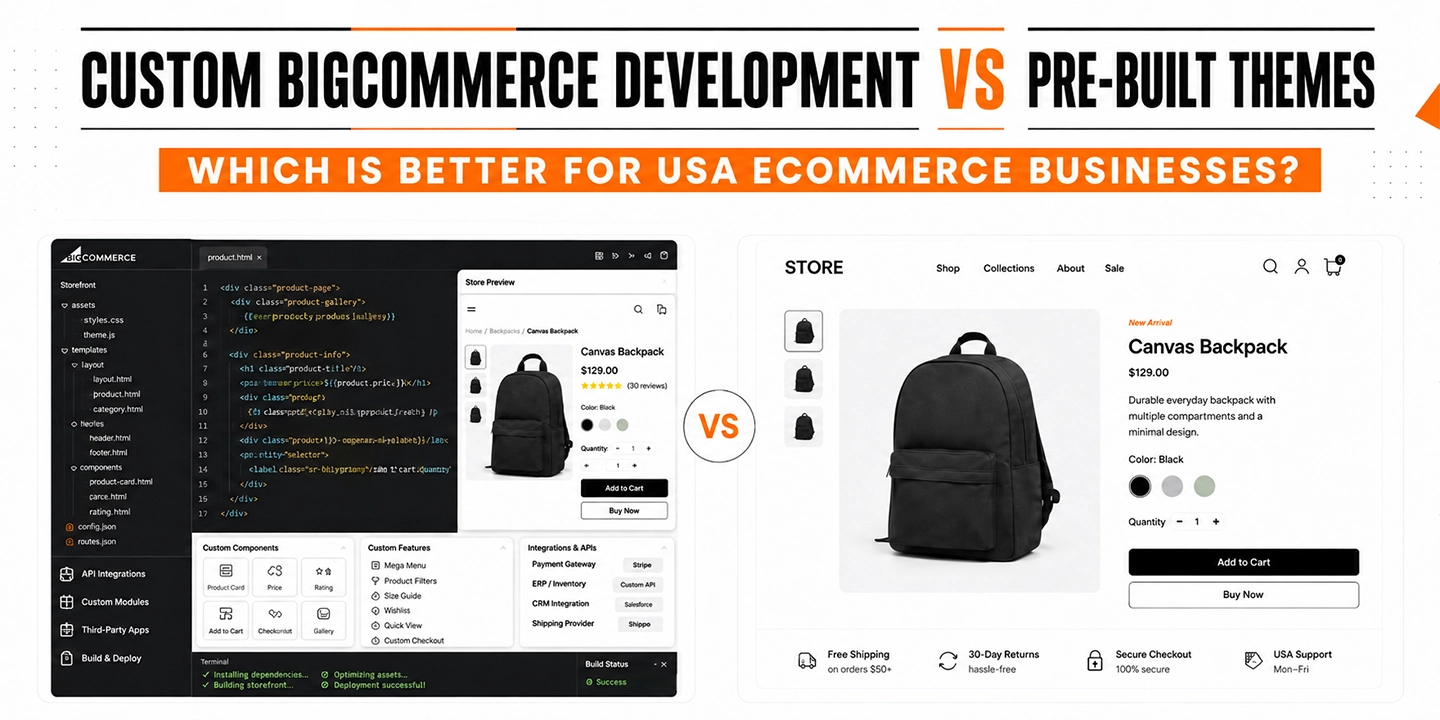
Custom BigCommerce Development vs Pre-Built Themes: Side-by-Side Comparison
| Factor | Custom BigCommerce Development | Pre-Built Themes |
| Initial Cost | Higher | Lower |
| Launch Speed | Longer | Faster |
| Branding Flexibility | Very High | Limited |
| Performance Control | High | Moderate |
| Scalability | Excellent | Moderate |
| Custom Features | Unlimited | Restricted |
| Integrations | Highly Flexible | Limited |
| SEO Flexibility | High | Moderate |
| Conversion Optimization | Extensive | Limited |
| Long-Term Growth | Strong | May Require Rebuild |
For businesses expecting significant growth, custom development often becomes more cost-effective over time.
When a Pre-Built Theme Makes Sense
A pre-built BigCommerce theme is usually the best choice when speed, simplicity, and budget are your primary concerns.
Best Fit Scenarios
A theme works well if:
- You’re launching a new ecommerce business
- The product catalog is relatively small
- Budget is under $10,000
- Custom functionality isn’t required
- Internal technical resources are limited
From my experience, many startups overestimate how much customization they actually need.
In the beginning, validating your product and generating sales often matter more than creating a completely unique storefront.
Advantages of Pre-Built Themes
1. Faster Launch
Many businesses can launch within a few weeks.
This speed allows brands to start generating revenue sooner.
2. Lower Upfront Cost
Typical costs include:
- Theme purchase
- Basic setup
- Content upload
- Minor customizations
This significantly reduces initial investment.
3. Lower Development Risk
Since the design framework already exists, there are fewer development uncertainties.
4. Easier Maintenance
Most updates are relatively straightforward.
Business owners without technical teams often appreciate this simplicity.
Limitations of Pre-Built Themes
Here’s where many businesses encounter problems.
Generic Branding
Many stores end up looking similar.
Customers may struggle to differentiate your brand from competitors.
Feature Restrictions
You’ll notice that adding advanced functionality often requires:
- Third-party apps
- Custom coding
- Workarounds
These can increase costs over time.
Performance Constraints
Theme code frequently includes unnecessary elements that impact speed.
Conversion Limitations
Custom user journeys, advanced product pages, and personalized experiences are often difficult to implement.
When Custom BigCommerce Development Makes Sense
Custom BigCommerce Development is ideal for established brands, growing businesses, B2B companies, and organizations seeking stronger differentiation and long-term scalability.
Best Fit Scenarios
Custom development is often the better choice when:
- Revenue is growing rapidly
- Customer experience impacts conversions
- Multiple systems require integration
- B2B selling is involved
- Brand differentiation is important
- Large product catalogs exist
- Advanced SEO strategies are required
Advantages of Custom BigCommerce Development
1. Complete Brand Control
Your website becomes a direct reflection of your brand.
Instead of adapting your business to a template, the website adapts to your business.
This creates stronger brand recognition and customer trust.
2. Better Conversion Opportunities
One thing many businesses overlook is conversion optimization.
Custom development allows:
- Better product pages
- Improved navigation
- Personalized shopping experiences
- Faster checkout processes
Small improvements can create substantial revenue increases.
3. Superior Performance
Custom-built storefronts often contain cleaner code.
Benefits include:
- Faster load times
- Better Core Web Vitals
- Improved mobile experiences
- Better SEO performance
4. Greater Scalability
Growth introduces complexity.
Custom development allows businesses to expand without constantly replacing systems.
This becomes particularly important for enterprise ecommerce operations.
5. Advanced Integrations
Many US businesses rely on:
- ERP systems
- CRM platforms
- Inventory management tools
- Marketing automation software
Custom BigCommerce development services make these integrations significantly easier.
BigCommerce Website Customization for B2B Businesses
B2B companies often gain the greatest value from custom development because their purchasing processes are more complex than standard B2C stores.
According to BigCommerce, B2B ecommerce sales reached approximately $2.3 trillion in 2024 and are projected to exceed $3 trillion by 2028. BigCommerce also reports that merchants using its B2B solutions achieved strong growth and significant ROI improvements. (BigCommerce)
Common B2B requirements include:
- Customer-specific pricing
- Quote requests
- Multi-user accounts
- Approval workflows
- Custom catalogs
- ERP integrations
These features often require custom development work.
BigCommerce continues investing heavily in B2B functionality, including advanced account hierarchies, permission controls, and quote management features. (BigCommerce)
Cost Comparison: Custom Development vs Themes
Pre-built themes typically cost less initially, while custom development delivers greater long-term flexibility and scalability.
Typical US Pricing
| Project Type | Estimated Cost |
| Theme Setup | $1,500 – $8,000 |
| Theme + Moderate Customization | $5,000 – $15,000 |
| Custom BigCommerce Design | $15,000 – $50,000 |
| Advanced Custom Development | $30,000 – $100,000+ |
| Enterprise BigCommerce Development | $75,000 – $250,000+ |
Actual costs depend on:
- Integrations
- Design complexity
- Custom functionality
- Product catalog size
- Business requirements
Which Option Performs Better for SEO?
Custom BigCommerce Development generally provides greater SEO flexibility.
Why?
Because developers can:
- Improve site architecture
- Reduce unnecessary code
- Improve page speed
- Create custom content experiences
- Build advanced schema structures
Pre-built themes can rank well.
However, custom development provides more opportunities for long-term organic growth.
Mobile Commerce Considerations
Mobile commerce continues to dominate ecommerce growth.
According to Salesforce holiday commerce reporting, mobile shopping continues to account for a major share of ecommerce activity, while social commerce and AI-powered shopping experiences are rapidly influencing purchasing decisions. (Investopedia)
This matters because mobile users have less patience.
A few seconds of delay can impact conversions.
Custom BigCommerce website customization allows businesses to design specifically for mobile-first user experiences.
Real-World Example
Imagine two apparel brands.
Brand A launches using a standard theme.
Brand B invests in custom development.
Initially:
Brand A spends less.
Brand B spends more.
After two years:
Brand A requires:
- Additional apps
- Design modifications
- Workarounds
- Theme limitations
Brand B already has:
- Custom integrations
- Better branding
- Improved conversion funnels
- Greater flexibility
In many cases, Brand B achieves stronger long-term ROI despite higher upfront costs.
How to Choose the Right BigCommerce Development Agency
The best agency understands ecommerce strategy, user experience, integrations, and long-term growth, not just coding.
Look for:
1. BigCommerce Expertise
Review:
- Certifications
- Partner status
- Portfolio examples
2. Ecommerce Experience
Industry knowledge matters.
An agency that understands ecommerce KPIs can deliver more business value.
3. Custom Development Capabilities
Ask about:
- APIs
- Headless commerce
- Integrations
- Performance optimization
4. Design Experience
Strong UX often drives higher conversions.
5. Long-Term Support
Your store will evolve.
Choose a partner that can support future growth.
Decision Framework for US Ecommerce Businesses
Choose a Pre-Built Theme if:
✓ You’re launching quickly
✓ Budget is limited
✓ Requirements are simple
✓ Growth expectations are modest
✓ Custom features aren’t necessary
Choose Custom BigCommerce Development if:
✓ Brand differentiation matters
✓ Revenue growth is a priority
✓ Complex integrations exist
✓ B2B selling is involved
✓ Long-term scalability matters
✓ Conversion optimization is important
Final Verdict
For startups and smaller ecommerce businesses, pre-built themes offer a practical way to enter the market quickly and cost-effectively.
For growing brands, established retailers, manufacturers, wholesalers, and enterprise organizations, Custom BigCommerce Development typically provides greater flexibility, stronger branding, improved conversion opportunities, and better long-term scalability.
The real question isn’t whether custom development costs more.
The question is whether the additional flexibility, performance, and growth potential create enough value to justify the investment.
For many successful US ecommerce businesses, the answer is yes.